ExpressVPN and CyberGhost are both Kape Technologies products, which makes this an unusually close comparison. Same parent company, same RAM-only server philosophy, wildly different price tags. After eight rounds of testing, ExpressVPN takes this one, winning five rounds to CyberGhost’s two, with one tie.
That verdict comes with an asterisk. CyberGhost costs a third of what ExpressVPN does at renewal, and for many readers, that gap matters more than faster downloads. Below is where each one earns its money.
✅ The Short Version:
- “Which do I buy if I don’t want to think about it?” ExpressVPN. It was 23% to 44% faster than CyberGhost across our three test locations; the app is simpler, and it connects in countries where CyberGhost stalls.
- “What if I’m counting every dollar?” CyberGhost. It is $2.19 a month on the two-year plan and, unlike almost every rival, it renews at the same $56.94 a year instead of doubling.
- “What if I travel somewhere with heavy censorship?” ExpressVPN, and it isn’t close. CyberGhost has no obfuscation at all.
CyberGhost vs ExpressVPN: Overview
| ExpressVPN 🥇 | CyberGhostVPN 🥈 | |
| 📋 Our Current Ranking | #3 | #6 |
| 🔖 Prices | Starts at $3.19 monthly | Starts at $2.19 monthly |
| 💸 Money-Back Guarantee | 30 days | 45 days |
| 🆓 Free Version/Free Trial | No/3 days for Android and iOS sign-ups | No/24 hours (macOS/Windows), 3 days (Android), 7 days (iOS) |
| 📓 Logging/Jurisdiction | No logging/British Virgin Islands | No logging/Romania |
| 🔐 Protocols | OpenVPN, Lightway, Lightway Turbo | WireGuard, OpenVPN, IKEv2 |
| 🌐 Servers | 3,000+ servers in 113 countries | 12,000+ servers in 100 countries |
| 🔝 Specialty Servers | Dedicated IP | Streaming, torrenting, gaming, dedicated IP, NoSpy |
| ⛔ Ad Blocking | Yes | Yes |
| 💾 RAM-Only Servers | Yes | Yes |
| 📺 Working With Netflix | Yes (15+ catalogs) | Yes (10+ catalogs) |
| 🔽 P2P Allowance | Yes | Yes |
| 📱 Concurrent Connections | 10-14 | 7 |
ExpressVPN vs CyberGhost: Apps and Ease of Use
Platform coverage is a wash. Windows, macOS, and Linux clients on both sides, plus iOS and Android. Both also have apps for Firestick, Apple TV, Smart TV systems, and routers, more than most of the market bothers with. If you want to try either without paying first, ExpressVPN’s 3-day mobile trial is the shorter of the two offers. Both VPNs also make our list of the top free VPNs for Mac.
Ease of use is on ExpressVPN’s side. One click connects you. The server list sits where you expect it, and every setting is grouped somewhere sensible. The layout is identical across platforms, so switching from your laptop to your phone requires no relearning. It’s my #1 VPN for beginners.
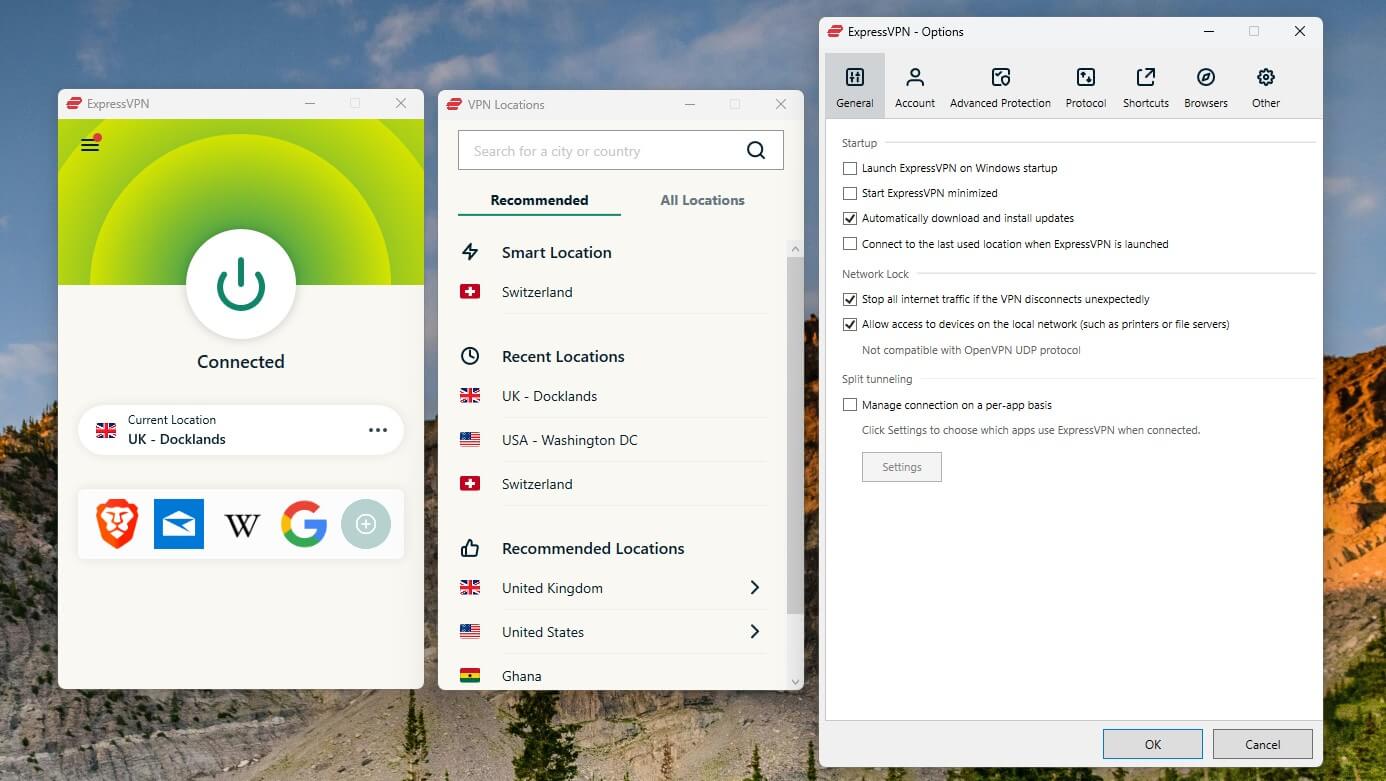
CyberGhost’s design is busier. Nothing about it is hard, but a few settings sit two or three menus deep, and the desktop client feels slower to respond than ExpressVPN’s. That sluggishness disappears on mobile. What does not disappear is the feature gap: CyberGhost strips P2P servers out of its mobile apps entirely.
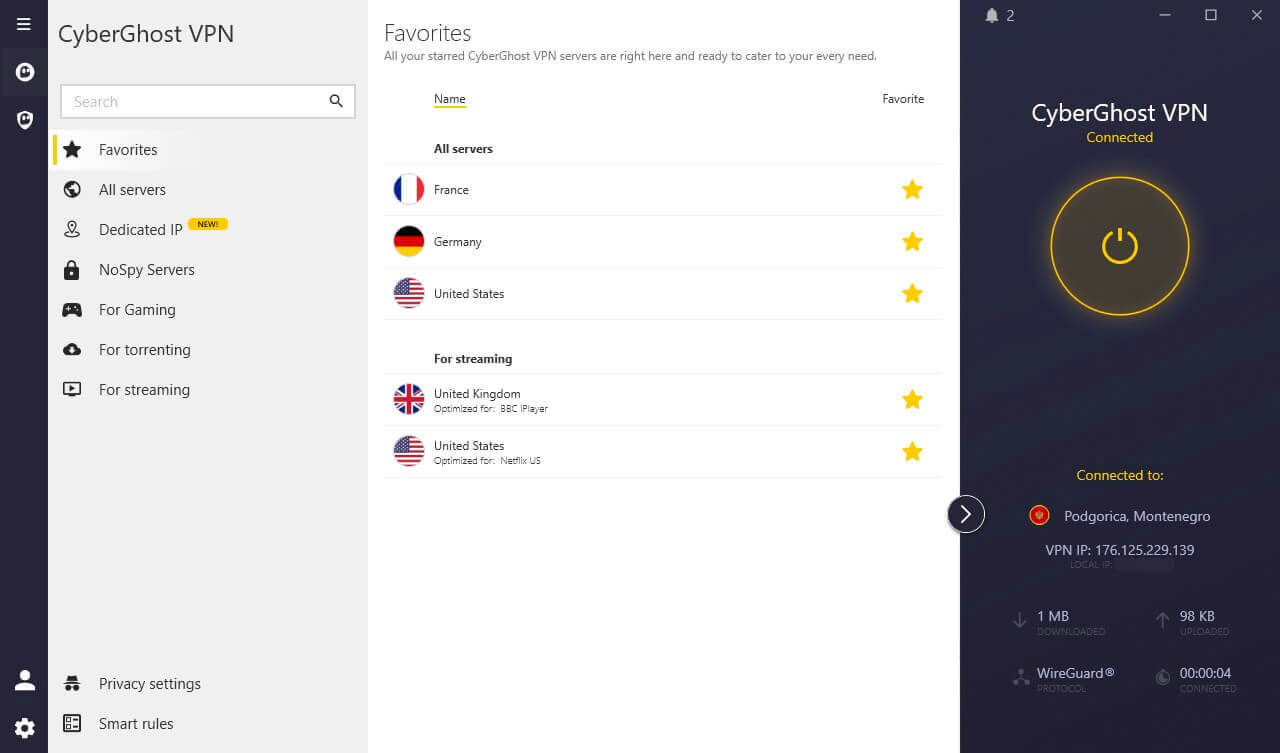
Device limits close the round. ExpressVPN allows 10 to 14 simultaneous connections and CyberGhost caps you at 7, a number that looked stingy three years ago and looks worse now that Surfshark sells unlimited connections.
Winner: ExpressVPN 🏆
Cleaner app, faster interface, and at least three more devices covered. CyberGhost is perfectly usable; it just asks a little more of you.
CyberGhost is Cheaper than ExpressVPN
ExpressVPN has never been the cheap option, but the gap has narrowed since the tiered pricing rollout. The headline deal is the two-year Basic plan at $3.19 per month with 4 free months. Advanced sits at $4.49 and adds ExpressKeys plus identity monitoring. The annual plans start at $4.99 for Basic and $5.99 for Advanced.
Our ExpressVPN coupon applies the discount automatically, and every plan carries a 30-day money-back guarantee. There is a fuller tier-by-tier breakdown on our ExpressVPN pricing page.
CyberGhost undercuts all of that. Six months costs $6.99 per month, but the two-year plan with two free months lands at $2.19, billed as $56.94 up front. Long-term plans come with a 45-day money-back guarantee, 15 days longer than ExpressVPN’s. The monthly plan gets 14 days instead. Our CyberGhost coupon page tracks the current offer. Renewal is where this round is decided.
CyberGhost charges $56.94 annually after the intro term, the same figure you paid the first time. ExpressVPN jumps to $99.95 a year. That is a 43% gap, and it compounds every year you stay subscribed.
Winner: CyberGhost 🏆
Cheaper on day one, cheaper on day one thousand, and it holds its renewal price instead of doubling it. If budget is the deciding factor, stop reading here.
ExpressVPN Wins on Security (Slightly)
Both providers sit under Kape Technologies, so they share a surprising amount of plumbing. Here is what overlaps and where they diverge.
🔁 Shared Features
As we noted in our CyberGhost review, the Kape relationship makes these two closer siblings than competitors.
- AES-256 encryption. The industry standard on both sides. It protects the tunnel itself, which is not the same thing as making you anonymous. Your account email, your payment method, and anything you log into still identify you.
- Kill Switch. We cut the VPN connection deliberately on both, and neither leaked. Both use a system-level switch rather than the per-app version NordVPN offers, so it is all or nothing.
- Split Tunneling. CyberGhost splits by domain, ExpressVPN by app. Pick whichever matches how you think about exclusions.
- Ad-blocking. CyberGhost has had this for years. ExpressVPN caught up with Advanced Protection, which blocks ads, trackers, and malicious domains. In our testing, it filtered slightly more aggressively than CyberGhost’s version. Both qualify as a VPN for ad-blocking.
- Modern protocols. CyberGhost leans on WireGuard. ExpressVPN uses its own Lightway, which now includes post-quantum protections against harvest-now-decrypt-later attacks. WireGuard is excellent, but it has no equivalent safeguard here.
✅ Unique Features
Neither provider is packed with extras the way NordVPN or PIA are. Each has one thing worth paying attention to.
🕵🏻♂️ NoSpy Servers (CyberGhost)
Most VPN companies rent rack space. CyberGhost bought several dozen machines and houses them in its own Romanian facility, staffed by its own employees. That removes the data centre operator from the trust equation, which is a hardware-level guarantee almost nobody at this price offers.
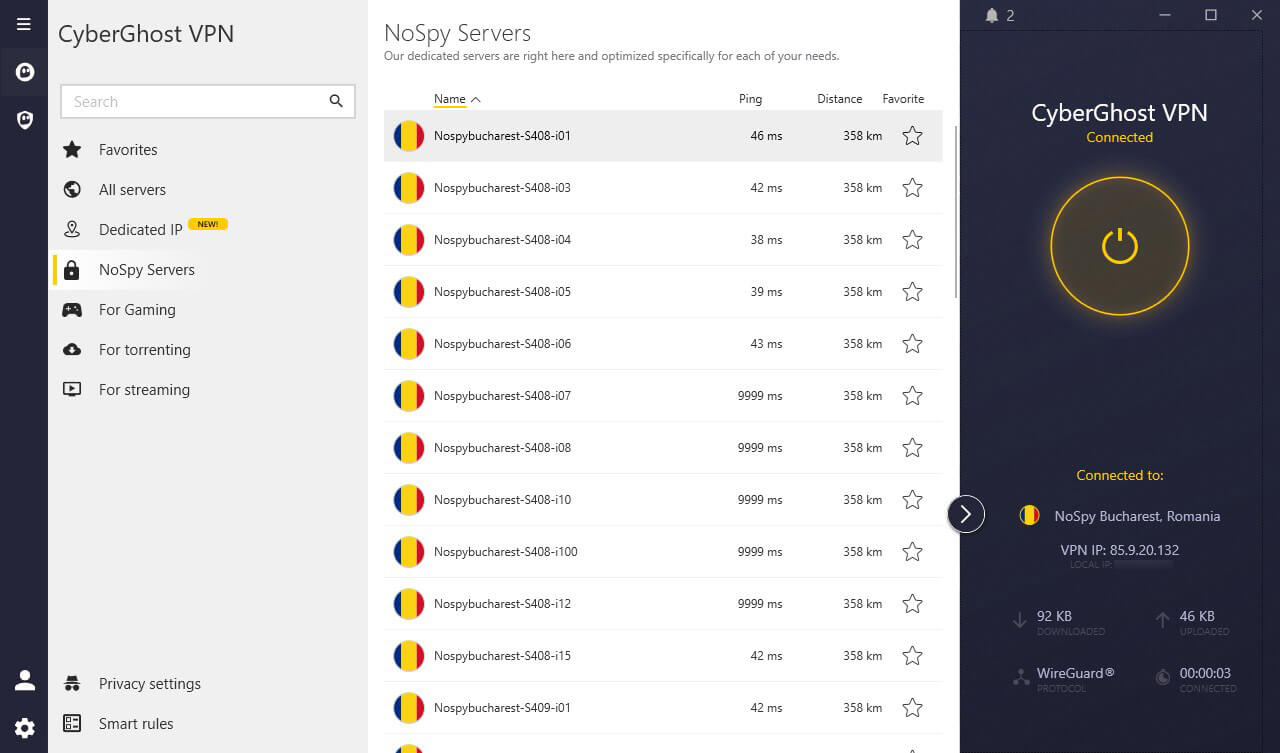
You do not pay extra. NoSpy access comes with every plan. The catch is geography: they sit in Romania, so they are close to useless for unblocking anything region-locked elsewhere. Treat them as a privacy option, not a streaming one.
👪 Parental Control (ExpressVPN)
Advanced Protection includes a Parental Control toggle that blocks adult sites at the DNS level. Flip it on in Settings, and the block applies to every device on the account. We verified it while testing whether ExpressVPN unblocks Pornhub.
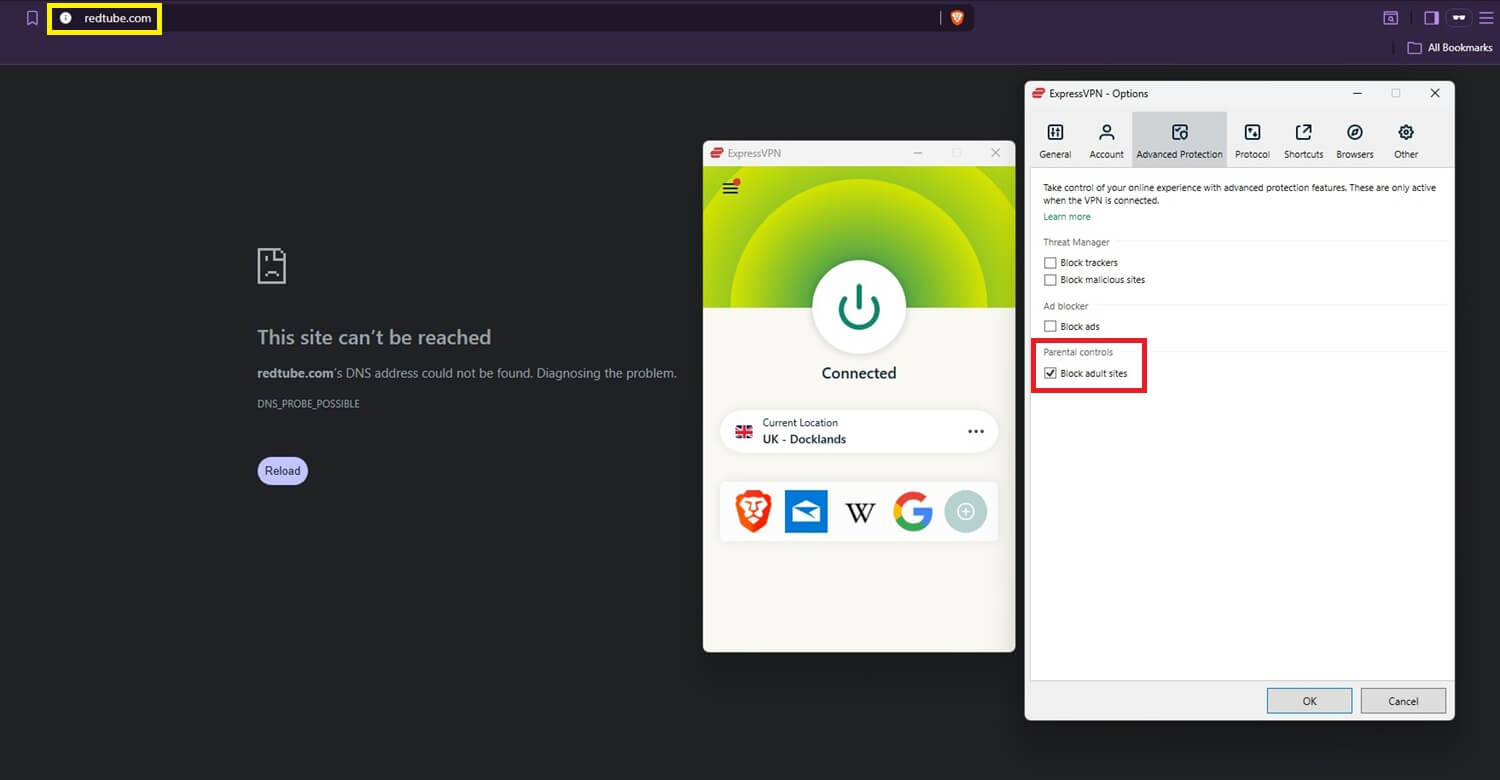
With the toggle on, the site was inaccessible. Off, it loaded normally. One gap: the filter covers adult content only. Gambling sites and social media pass straight through, and both belong on that list.
🔒 Other Features
CyberGhost sells antivirus as a $1 monthly add-on. It detects reliably enough, but it is Windows-only, which is presumably why it costs a dollar.
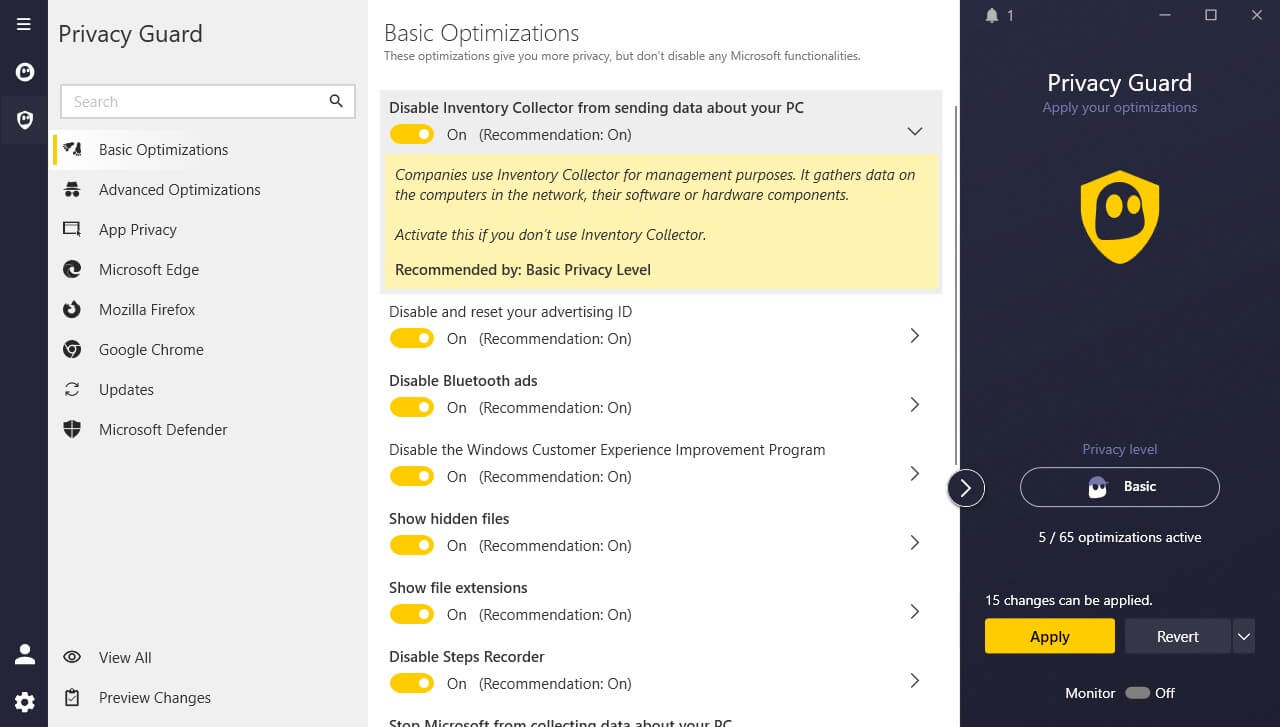
Privacy Guard is the more interesting inclusion. It watches for Windows settings that revert, flags them, and lets you disable telemetry and forced updates in one place. It’s also Windows-only.
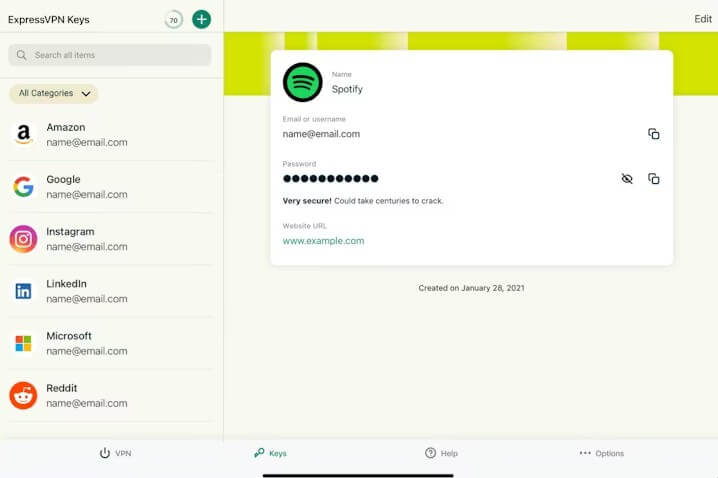
ExpressVPN counters with ExpressKeys, a zero-knowledge password manager bundled into Advanced and Express Pro. It is not going to displace 1Password, but it autofills cleanly and works across every platform the VPN does.
Winner: ExpressVPN 🏆
Post-quantum Lightway, obfuscation, and a password manager that works everywhere beat two Windows-only utilities. NoSpy is the better idea in isolation, but it only helps Windows users who care about Romanian servers specifically.
CyberGhost and ExpressVPN Don’t Store Logs
CyberGhost operates from Romania, outside the Eyes alliances and outside EU data retention rules. ExpressVPN’s British Virgin Islands base is better still, with no mandatory retention law and no treaty obligations. Both belong on any list of the most secure VPNs, and neither has a logging scandal in its history.
📜 Privacy Policy Analysis
ExpressVPN’s policy is unusually readable. It rules out storage of browsing history, visited domains, IP addresses, DNS queries, and location data in plain language rather than legalese. What it does keep is minimal and obvious: your email address, so the plan functions, and a count of active connections, so the 10-to-14 device limit can be enforced. CyberGhost’s policy holds to the same line.
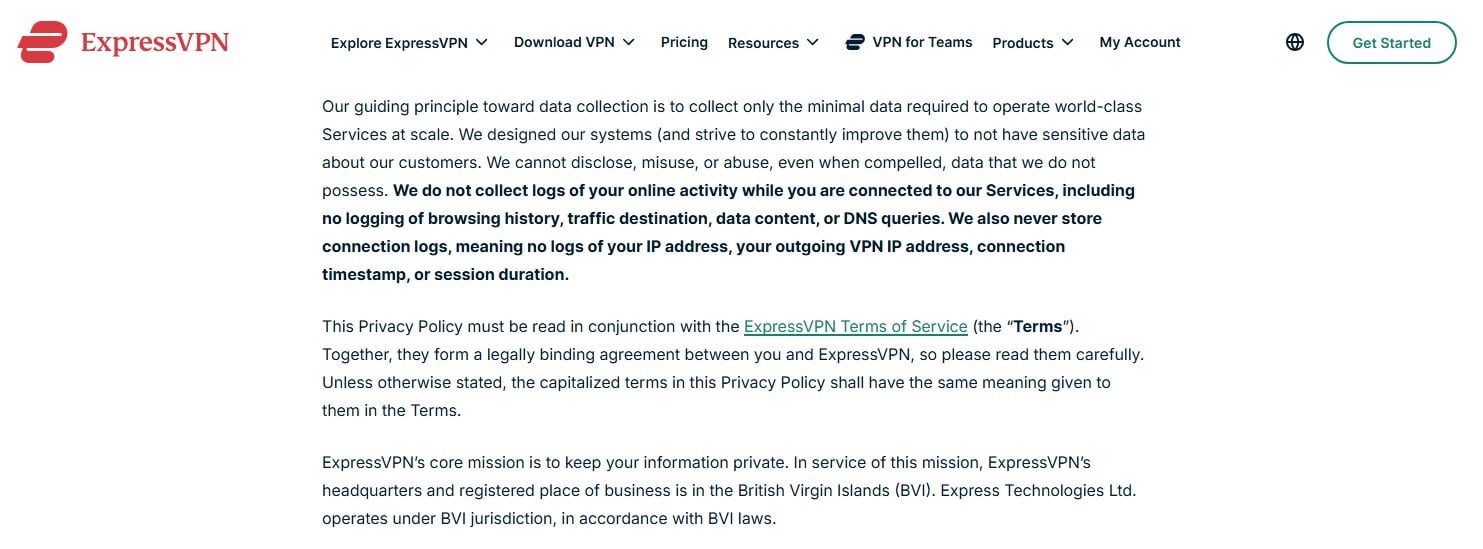
Both also operate RAM-only infrastructure. Nothing is written to disk, so a reboot wipes the machine clean whether it was scheduled or not. Seizing one of these servers gets you an empty box.
Audit records tell a similar story from opposite directions. CyberGhost has published quarterly transparency reports since 2011 and has completed three no-logs audits with Deloitte Romania, in 2022, 2024, and again in early 2026.
ExpressVPN went wider instead of deeper: 27 independent audits as of 2026, more than any competitor, covering the no-logs policy, TrustedServer, Lightway, and the browser extension. PwC, Cure53, KPMG, and F-Secure have all worked on ExpressVPN’s stack, and we listed the full sequence in our ExpressVPN analysis.
Volume is not the same as rigour, though. CyberGhost’s three audits are focused specifically on the no-logs claim, which is the one that matters most.
Winner: Tie 🟰
Two favourable jurisdictions, two verified no-logs claims, two RAM-only fleets, zero incidents between them. Nobody wins this round.
ExpressVPN is Faster than CyberGhost: Speed Tests
Speed loss is the number that matters, so start with our unprotected baseline. We tested from Southeastern Europe on a fiber line.
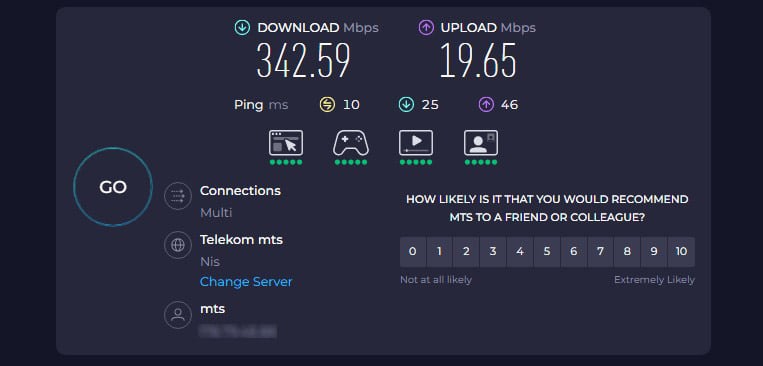
Each provider was measured three times a day for three consecutive days across the United Kingdom, the United States, and Japan. We left protocol selection on automatic for both, which means we cannot say which protocol handled which test. That was deliberate. Almost nobody changes that setting, so leaving it alone reflects how these apps actually get used.
| 📥 Download Speed Loss | 📤 Upload Speed Loss | |
| ExpressVPN | 24% | 9% |
| CyberGhost | 43% | 9% |
Uploads were a dead heat, and 9% loss is small enough to ignore on either service. Downloads were not close. CyberGhost gave up 43% of our line speed against ExpressVPN’s 24%. For context, our VPN speed tests put NordVPN at 7%, so neither of these is leading the category. Per-location throughput shows what that gap feels like in practice, and looking at it now, it’s not small.
| UK (DL/UL) | US (DL/UL) | Japan (DL/UL) | |
| 🔴 ExpressVPN | 298.82/18.50 Mbps | 274.61/18.35 Mbps | 206.33/16.73 Mbps |
| 🟡 CyberGhost | 243.07/18.55 Mbps | 190.96/18.25 Mbps | 161.22/16.87 Mbps |
ExpressVPN downloaded 23% quicker to London, 44% quicker to the US, and 28% quicker to Tokyo. The margin widens with distance, which is the opposite of what you want from a budget provider.
Winner: ExpressVPN 🏆
Faster on every route we measured, and steadier between runs. CyberGhost is fine for 4K streaming. It is the wrong pick for gaming or large downloads over long distances.
Streaming and Torrenting: CyberGhost vs ExpressVPN
Let’s see who’s a stronger competitor for P2P activities and streaming.
🎥 Streaming Test: ExpressVPN Wins
On paper, CyberGhost should take this. It has labelled streaming servers that name the platform directly, so you pick “Netflix US” or “BBC iPlayer” from a list instead of guessing. It is a good idea, and it extends to live TV. We used it to catch MotoGP races for free and pull Grand Slam tennis feeds in full quality. Our CyberGhost Netflix guide covers which profiles work where.

In practice, ExpressVPN matches it without any of the labelling. No dedicated streaming servers, and it still unblocked more. The Netflix gap is the clearest example: 15 libraries to CyberGhost’s 10. Prime Video was the outright failure, where CyberGhost could not get us in at all.

Both offer Smart DNS for consoles and TVs that cannot take a VPN app. CyberGhost lists more Smart DNS endpoints, but ExpressVPN’s MediaStreamer succeeded more often when we pointed both at the same set of sites.
| CyberGhost | ExpressVPN | |
| Netflix US | ✅ Works | ✅ Works |
| BBC iPlayer | ✅ Works | ✅ Works |
| Disney+ US | ✅ Works | ✅ Works |
| Hulu US | ✅ Works | ✅ Works |
| Prime Video US | ❌ Blocked | ✅ Works |
| HBO Max US | ✅ Works | ✅ Works |
🧲 Torrenting Test: ExpressVPN Wins
CyberGhost has dedicated P2P servers on macOS and Windows. They are stable and private, and for reasons the company has never explained, absent from the mobile apps. On PC, they work without a fuss.
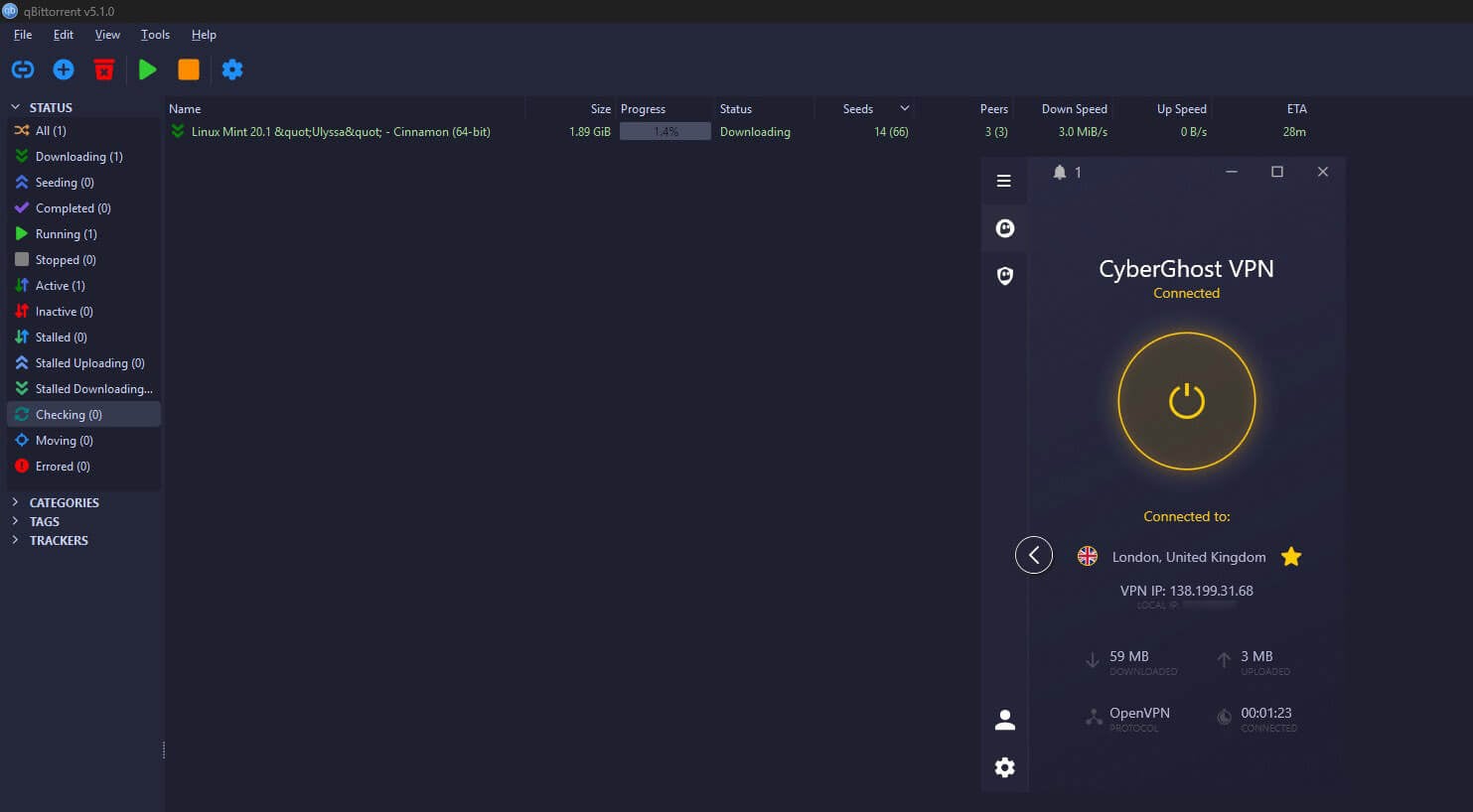
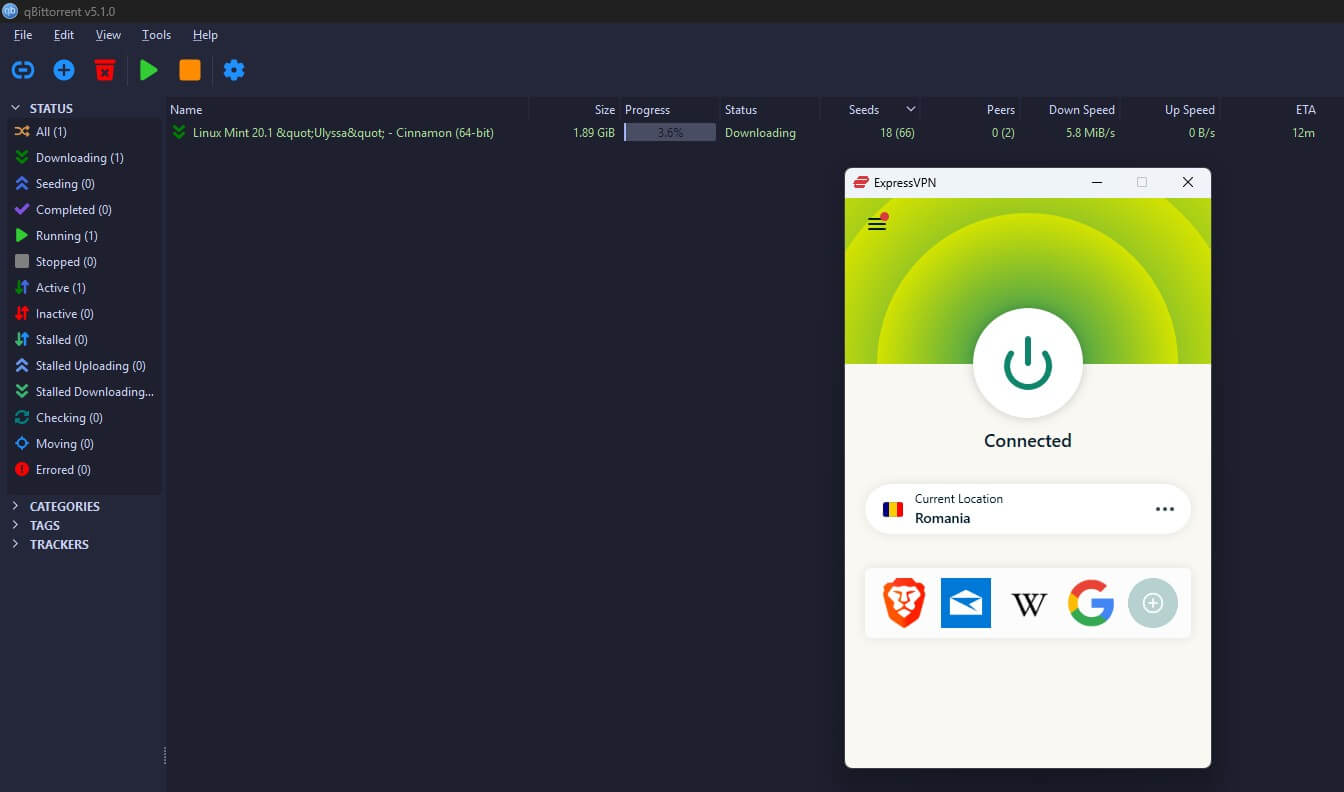
ExpressVPN allows P2P on the whole network and beats CyberGhost’s specialist servers anyway. Both pulled torrents down quickly on nearby locations. On distant ones, the download gap from the speed round reappeared.
Winner: ExpressVPN 🏆
Five extra Netflix libraries, a working Prime Video connection, and quicker torrent throughput. CyberGhost’s specialist servers are a good idea that our numbers did not reward.
CyberGhost Wins on Server Locations
These two count their networks differently, which makes a direct comparison awkward. Here are their network sizes, updated October 2026:
- ExpressVPN: 214 app-selectable locations in 113 countries following its July 2026 expansion. The company stopped publishing a server total years ago.
- CyberGhost: over 12,000 servers in 100 countries, spread across 126 locations.
Coverage is generous. The United States, United Kingdom, Canada, and Australia are heavily served on both, and we rated each of them among the better VPNs for Japan on the strength of their Tokyo routes. Dedicated IPs are available from both, in roughly twenty locations each, and CyberGhost charges less for the add-on at $2.50 per month on a two-year term.
ExpressVPN now covers 13 more countries, which is the more useful metric if you need a specific flag. CyberGhost’s advantage is raw capacity: a fleet that size spreads load thinly and rarely feels congested at peak hours. Both use 10 Gbps ports, so neither is bottlenecked at the hardware level.
Winner: CyberGhost 🏆
Sheer volume takes it. ExpressVPN reaches more countries, but 12,000 machines means you are far less likely to land on a crowded one.
ExpressVPN Works in China, CyberGhost Doesn’t
CyberGhost has no obfuscation. Its traffic is identifiable as VPN traffic, so any network doing deep packet inspection can block it. That rules out China, and our CyberGhost China guide goes into why. It has worked for us in the UAE, where filtering is lighter, but Turkey and Iran are unreliable, and during periods of unrest when censorship tightens, it tends to stop working altogether.
ExpressVPN is the safer travel option by a wide margin. It does not document obfuscation as a named feature, but in our testing, the disguising happens automatically on every connection. That is why it keeps working in China, Iran, Turkey, and Russia when others don’t. Our China VPN guide has the current picture. There is nothing to configure, and it’s the best part for me.
Winner: ExpressVPN 🏆
One provider works behind national firewalls, and one does not. If any part of your year involves China, Iran, Turkey, or Russia, this round decides the whole comparison.
CyberGhost vs ExpressVPN: Choose ExpressVPN in 2026
ExpressVPN takes apps, security, speed, streaming, and censorship. CyberGhost takes price and network size. Logging is a tie, and speed and obfuscation are not what I would trade to save money. The money argument still holds. Two years with CyberGhost costs $57 and $98 with ExpressVPN. Stream at home on an open connection, and you will never feel the difference.
Travel, game, or cover more than 7 devices and you will. Two rivals deserve a look. Surfshark matches CyberGhost on price with unlimited devices and working obfuscation, which is how it won our CyberGhost vs Surfshark comparison, and NordVPN sits between on price and beats ExpressVPN in our NordVPN vs ExpressVPN clash. Pricier is better, which ExpressVPN has proven.