NordVPN vs Kaspersky VPN: which one should you pick? Our short answer is NordVPN. Kaspersky VPN is a functional service with solid security features, a decent streaming experience, and attractive subscription prices. NordVPN costs more, but it earns the premium with better reliability across the board.
The quick verdict only tells part of the story. Kaspersky VPN wins a few rounds you might not expect, and depending on your budget and priorities, it could still be the right pick for you. Our full NordVPN vs Kaspersky VPN comparison for 2026 covers speeds, privacy, streaming, and pricing in detail, so let’s get into it.
Kaspersky VPN vs NordVPN: Quick Comparison
| Kaspersky VPN | NordVPN | |
| Our Current Ranking 📋 | TBD | #1 |
| Prices 🤑 | Starts at $40.99 for the 1st year | Starting at $3.49/mo for 2 years + 3 free months |
| Money-Back Guarantee 🪙 | 30 Days | 30 Days |
| Free Version/Free Trial 🆓 | Yes, 200 MB traffic per day/7 Days | No/3 Days via Android |
| Logging/Jurisdiction 🕵️ | Slight logging/Russia | No/Panama |
| Protocols 🌐 | WireGuard, Catapult Hydra | OpenVPN, NordLynx, IKEv2, NordWhisper |
| Servers 🏠 | 6,000+ in 120+ locations | 9,500+ in 137 countries |
| Specialty Servers ✅ | Torrenting, Streaming, Gaming, Double VPN | Dedicated IP, Double VPN, Onion Over VPN, Obfuscated |
| RAM-Only Servers 🛡️ | No | Yes |
| Working With Netflix 📺 | Yes (10+ catalogs) | Yes (~30 catalogs) |
| P2P Allowance ↔️ | Yes | Yes |
| Concurrent Connections 📟 | 5 | 10 |
Applications, Compatibility, and Ease of Use
If you need a VPN for multiple devices, you’ll want the best possible compatibility. Kaspersky VPN covers Windows, macOS, Android, iOS, and routers. This standard proposition should provide all you need. But what if you need a VPN for streaming devices? In that case, you can say goodbye to Kaspersky. It doesn’t support Firestick or Apple TV, and installing it on an Android TV requires a bit of effort.
That’s where NordVPN chimes in with support for all of them, plus a few vital Linux distros. Kaspersky VPN also allows 5 simultaneous connections. Even ExpressVPN, which has stuck to 5 for years, increased the allowance to 10-14. NordVPN has 10, which has now become an industry standard. So far, NordVPN is better. But what about ease of use? Let’s examine the two providers side by side:
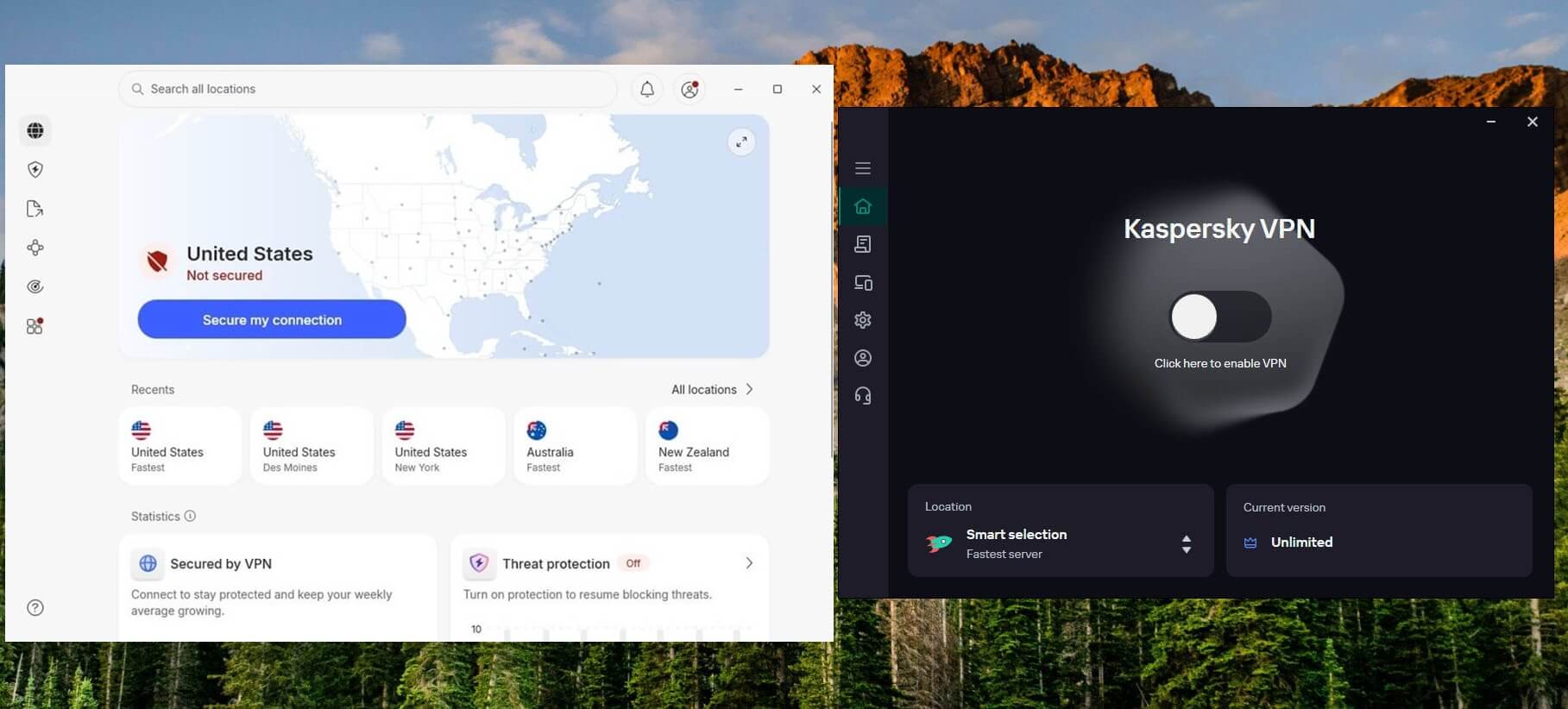
Both look modern and sleek, but NordVPN more so. With its world map and snappy apps, it’s hard to definitively beat NordVPN. However, Kaspersky VPN is surprisingly functional on both desktop and mobile devices, with virtually no glitching. Connection times are short in both cases, about 2-3 seconds each. Plus, using various VPN features is a walk in the park, essential when you want to enable a kill switch or choose between dark and light app themes.
🏆 Winner: NordVPN
Kaspersky VPN is More Affordable Than NordVPN
Looks and feel matter less than price. We all want reliable VPNs that cost very little, and in reality, that’s rarely found. These two, however, keep their costs very low. Flexible pricing isn’t Kaspersky’s game, so you choose from two plans:
- Annual at $40.99 for 5 devices
- Monthly at $8.99/mo for 5 devices
Kaspersky’s renewal price is shockingly low at $47.99 per year, which works out to $4 per month. For an annual plan, that’s pretty much record-breaking. You get a 30-day money-back guarantee and a 7-day free trial that only requires a credit card. NordVPN’s pricing structure changes occasionally but not by much. Here’s what you can expect from its pricing; we’ll focus on the long-term:
- Basic 2-year plan: $3.49 per month, 10 devices
- Complete 2-year plan: $4.49 per month, 10 devices
- Prime 2-year plan: $7.49 per month, 10 devices
Its promoted 2-year plans start at $3.49/mo (at the time of writing) and go up to about $7-$8 a month, based on the current NordVPN promotion. Annual and monthly plans are considerably pricier. To be clear, NordVPN is far from expensive and is among the best options at this price. It also comes with a 30-day money-back guarantee, plus a 3-day trial if you sign up on Android. But in this matchup, Kaspersky VPN is the more affordable option in the short and long term.
🏆 Winner: Kaspersky VPN
NordVPN Beats Kaspersky VPN in Security
Pricing alone doesn’t tell the full story. A cheaper VPN that offers less isn’t better value for money. In our NordVPN vs Kaspersky VPN duel, we found that NordVPN offers more, as you’ll see below.
Shared Features: Only the Basics
Both VPNs cover the standard essentials:
- 256-bit AES encryption
- Kill Switch
- Split Tunneling
- WireGuard protocol (NordLynx in NordVPN)
We tested their kill switches, and both work without flaws, though NordVPN adds an advanced kill switch that blocks your internet connection until you connect to a VPN server. There’s also an app-level kill switch. Kaspersky VPN lacks this option. Split tunneling will work the same in both: it applies to apps but not websites, as is the case with CyberGhost and its Exceptions feature.
Both offer WireGuard, but NordVPN’s NordLynx version adds a double NAT system that strengthens privacy by preventing data storage on VPN servers.
Advanced Features: Both Impressed Me
I had a lot of expectations here, so here’s what I found.
Kaspersky VPN
Kaspersky VPN offers:
- Catapult Hydra protocol
- Private Browsing
- Smart Protection
- Double VPN
Catapult Hydra, pioneered by Hotspot Shield’s at-the-time parent company, is an OpenVPN TLS-based protocol built for bypassing censorship and network blocks. Private Browsing blocks data-collection attempts from websites, though we can’t verify how well it works because no report shows what has been blocked.
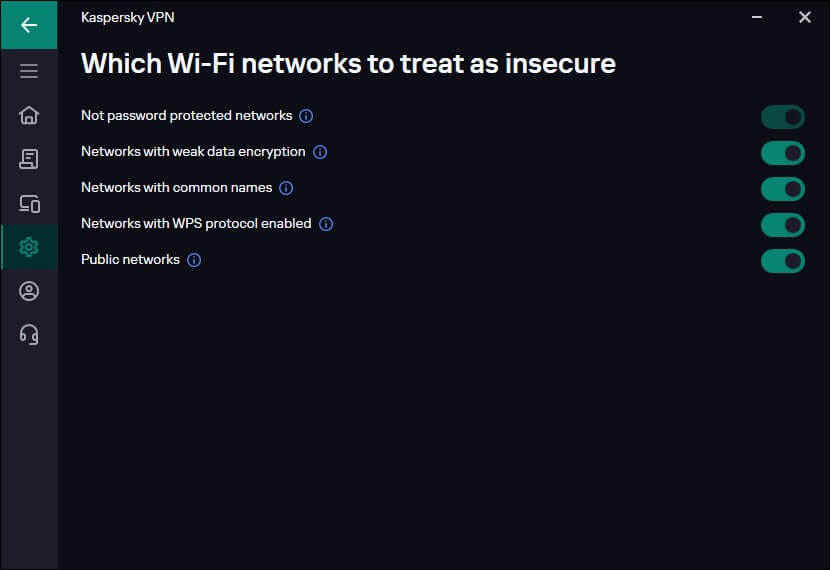
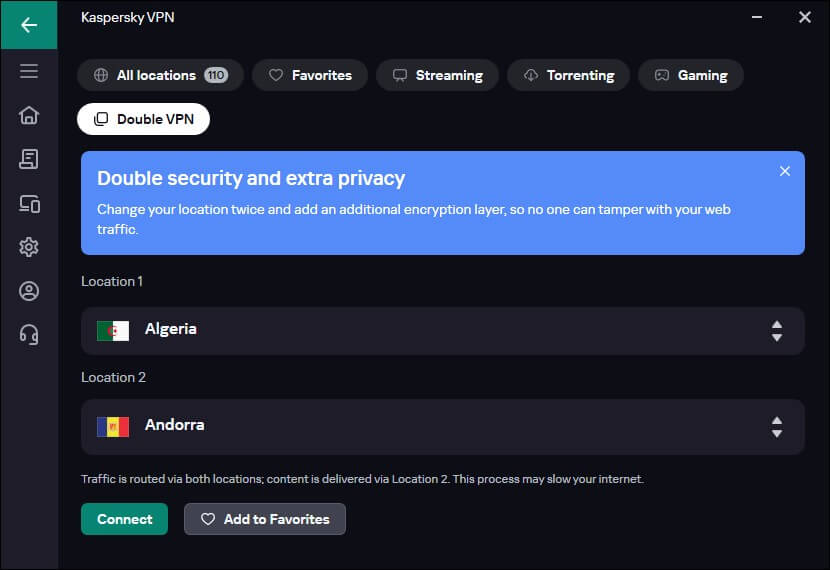
Smart Protection automatically enables the VPN on insecure WiFi networks at restaurants, cafes, and airports. You can assign known networks and even define what counts as insecure, so protection kicks in only when needed. Both VPNs offer a Double VPN, which adds an encryption layer and changes your VPN location twice to prevent tracking. Kaspersky’s version is more customizable.
NordVPN
NordVPN offers a few more aces, such as:
- Threat Protection Pro
- Meshnet
- Obfuscated servers
- NordWhisper
Threat Protection Pro, available from the Complete plan, blocks ads, trackers, malicious sites, and malware in real time on all devices. In our experience, it’s far more reliable than Kaspersky’s Private Browsing, plus you can actually see blocked threats. Meshnet connects up to 60 devices for encrypted file sharing and remote access. Obfuscated servers mask VPN traffic so it looks normal.
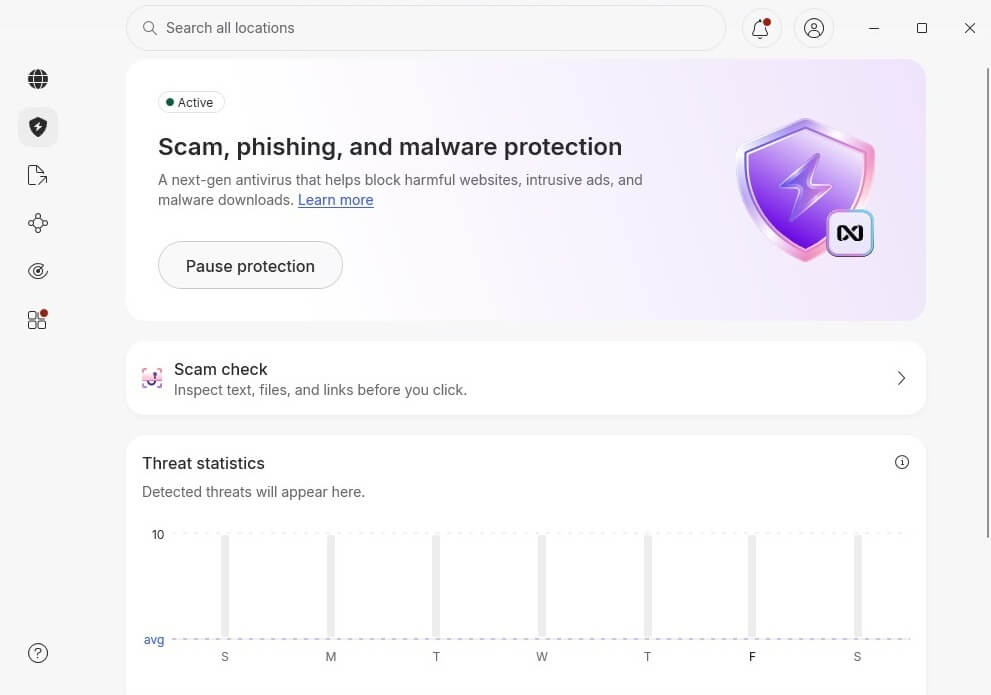
Precisely this lets you use the VPN in China and other restricted environments. NordWhisper is the newest addition and handles network filtering. Higher plans also add NordPass, NordLocker, and Coveron. NordVPN has more features outlined in our review, but we focused on the most important ones here. Kaspersky VPN has impressive specs for the price, with Double VPN the most surprising.
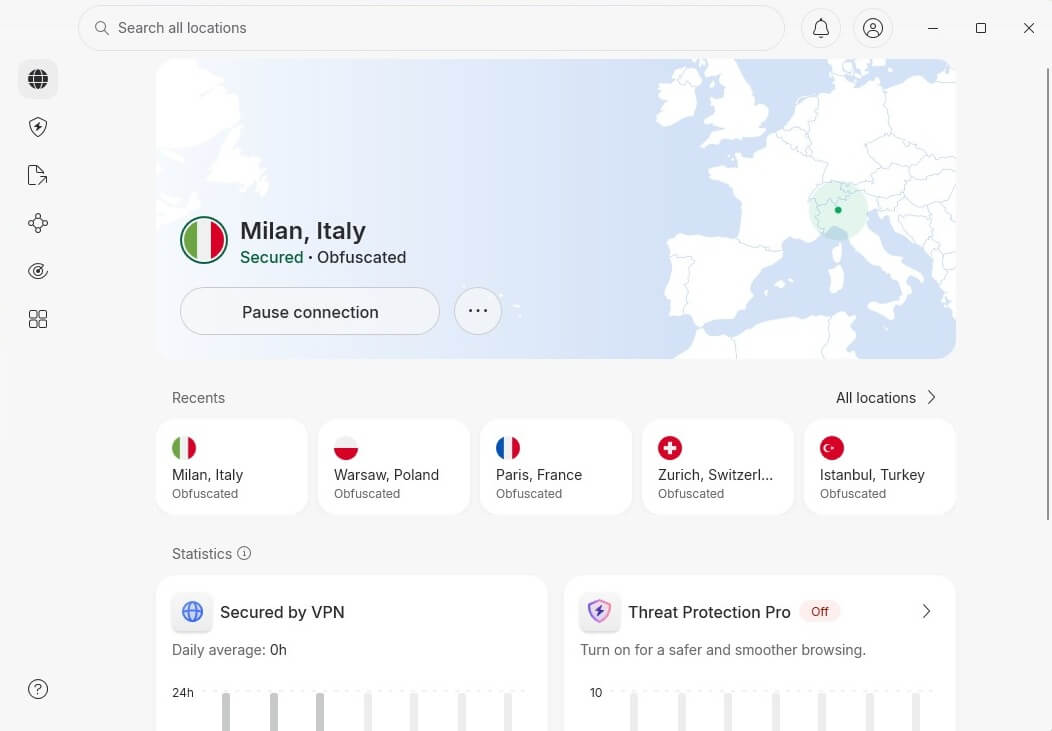
Still, it can’t compete with NordWhisper, Threat Protection Pro, and Meshnet, which put NordVPN in the winning spot this round.
🏆 Winner: NordVPN
No Logging in Kaspersky and NordVPN: With a Caveat
Logging is where things get a speck more interesting, and Kaspersky VPN is the one with explaining to do. Here’s what I found in 2026.
Why Is Kaspersky Problematic?
Kaspersky is a Russian company. Russia sits outside the 5/9/14 Eyes alliance, but it’s a heavily censored country that requires VPN services operating within its borders to hand over user data. The alleged government ties that got Kaspersky products banned in the US were never officially confirmed, but they damage the VPN’s reputation all the same. To its credit, Kaspersky has undergone independent audits and moved much of its infrastructure to Switzerland.
Its no-logs policy specifically has never been audited, so on the claim that matters most, we just have to take its word and pretend it belongs among the most secure VPNs in 2026. And “no-logs” is doing some heavy lifting. Kaspersky doesn’t record your browsing activity, but it stores login events for a month, session statistics, timestamps, device identifiers, and IP addresses for approximate location. That’s more metadata than a privacy-first VPN should keep.
Why NordVPN Beats Kaspersky
NordVPN beats Kaspersky for several reasons. It’s based in Panama, an offshore location with favorable privacy laws, and it has never been credibly accused of data logging. Its privacy policy states that no sensitive logs are kept beyond a few mandatory bits needed for service operation. NordVPN also runs RAM-based servers, which Kaspersky doesn’t, and has multiple third-party audits.
For example, Deloitte audited its no-logging policy for the sixth consecutive time in February 2026, a good case in point. Nord Security, NordVPN’s parent company, also builds NordPass, NordLocker, and Coveron. We tested all three and never ran into a single security or privacy issue.
🏆 Winner: NordVPN
NordVPN is Faster than Kaspersky VPN in Testing
This round is interesting because we’re essentially testing Hotspot Shield’s servers. We already compared Hotspot Shield to NordVPN, and NordVPN was faster, so let’s see if Kaspersky’s skin changes the result. Our native internet speed in Belgrade, Serbia, where we tested, was roughly 340 Mbps down and 20 Mbps up. From there, we tested providers as we always do in these duels.
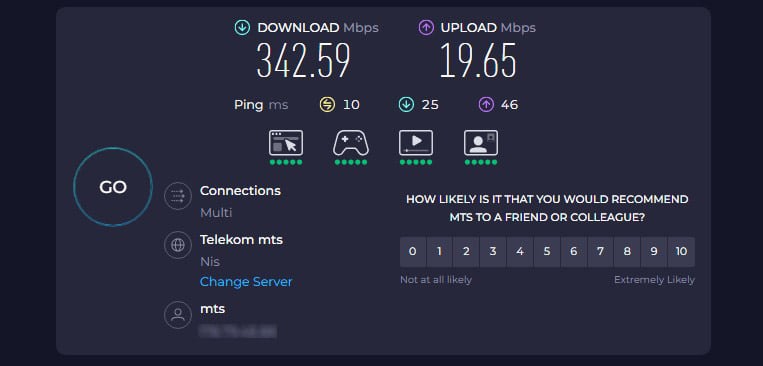
Three days in a row, three times a day, across three server locations. We picked the UK, the US, and Japan to see how well each retains speed over distance. The lower the losses, the better. Kaspersky VPN performs on par with its US brother, Hotspot Shield, which means it’s considerably slower than NordVPN.
| Average DL Speed Loss 🔽 | Average UL Speed Loss 🔼 | |
| Kaspersky VPN | 26% | 15% |
| NordVPN | 18% | 7% |
Here are the average results from all three locations:
| UK (Download/Upload) | US (Download/Upload) | Japan (Download/Upload) | |
| Kaspersky VPN | 291.20/18.47 Mbps | 246.66/19.25 Mbps | 222.71/18.27 Mbps |
| NordVPN | 324.25/18.68 Mbps | 292.75/18.31 Mbps | 223.54/17.85 Mbps |
🏆 Winner: NordVPN
Kaspersky VPN vs NordVPN: Streaming and P2P
Kaspersky VPN is slower, but its speeds are sufficient for streaming and torrenting, and this round brought a few surprises against NordVPN.
Streaming: A Battle of Equality
Kaspersky VPN has dedicated streaming servers for unblocking platforms outside their regions. Open the server list, click Streaming, and you’ll find dozens. The VPN works with Amazon Prime USA thanks to platform-specific servers, and there are more for Apple TV, BBC iPlayer, Crunchyroll, Disney+, ESPN+, Netflix, Hulu, and Spotify.
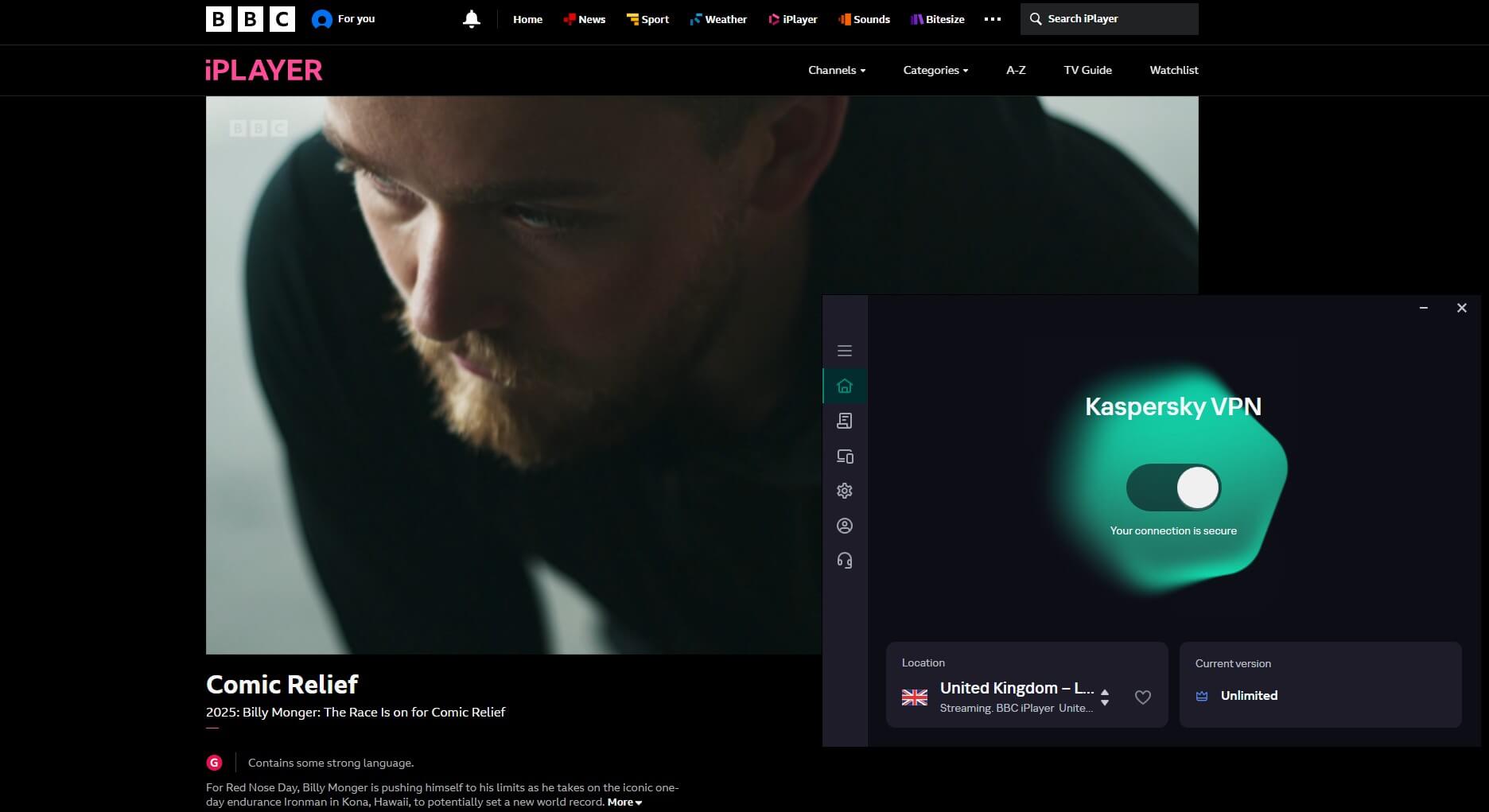
All worked well in our tests, an enormous advantage over other antivirus VPNs. Want to access SRF to stream MotoGP races abroad for free? Open the Streaming list, click SRF Switzerland, and you’re ready to roll. NordVPN skips dedicated streaming servers but works equally well, with around 20 unblockable Netflix catalogs and easy access to other major platforms. Unlike Kaspersky VPN, it lets you enjoy Sky Sports from the USA, and its browser extensions include location spoofing.
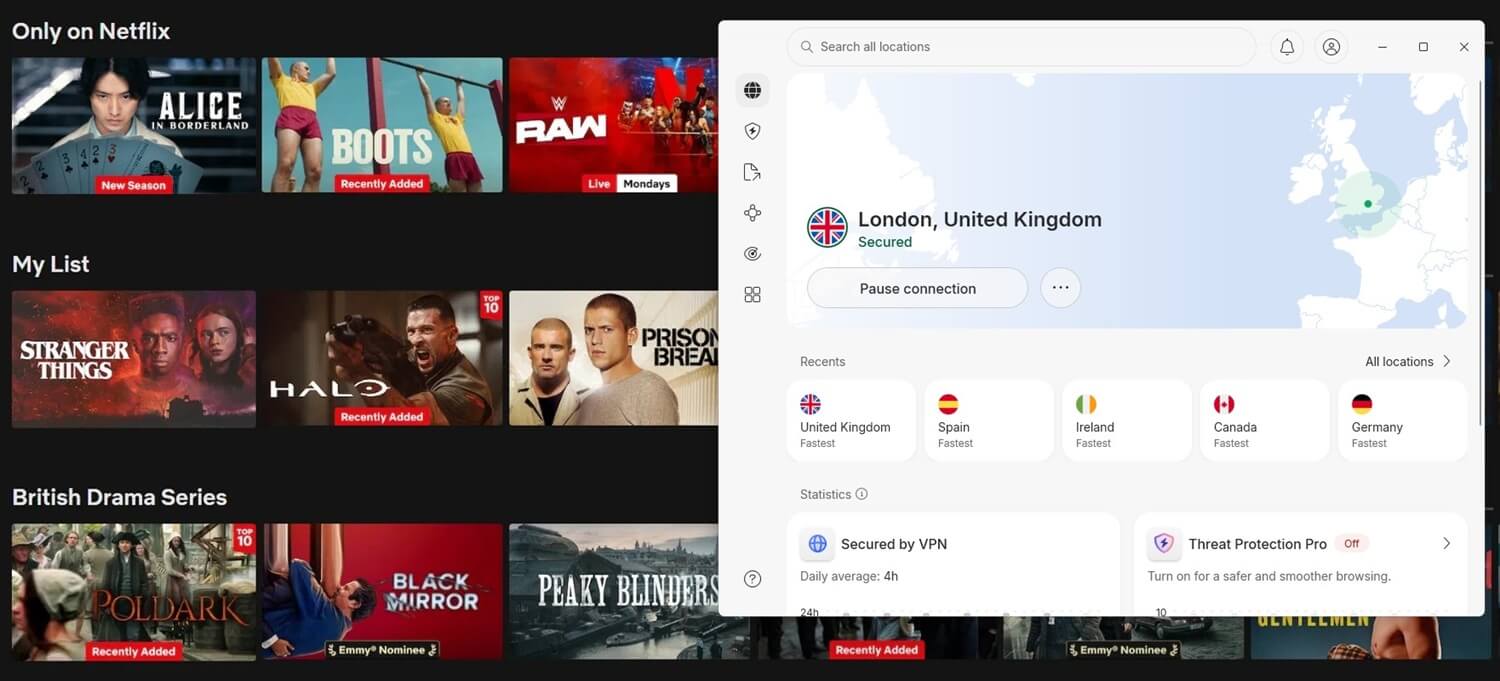
With Smart DNS for non-compatible devices, NordVPN is streaming-ready on anything. These two are more or less equal, but we’d give a slight edge to NordVPN for Smart DNS and its streaming-friendly extensions.
Torrenting: Excellent Results on Both Sides
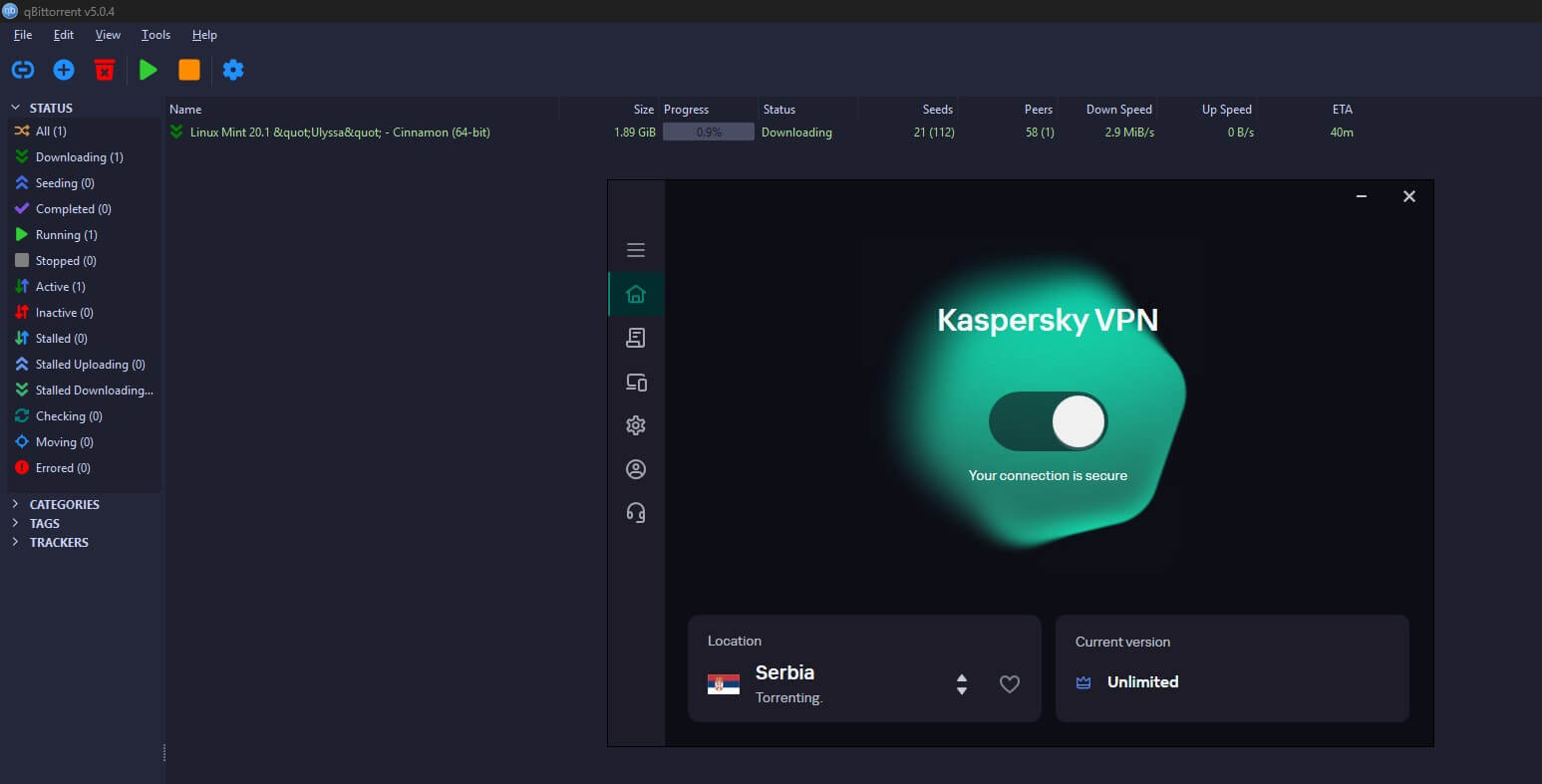
Both providers offer dedicated P2P servers across dozens of countries, so finding one nearby is easy. We used servers in Serbia, Bulgaria, and Greece with stellar performance on both sides, though Kaspersky dipped a bit when we switched to a distant server. NordVPN has a few extra tricks.
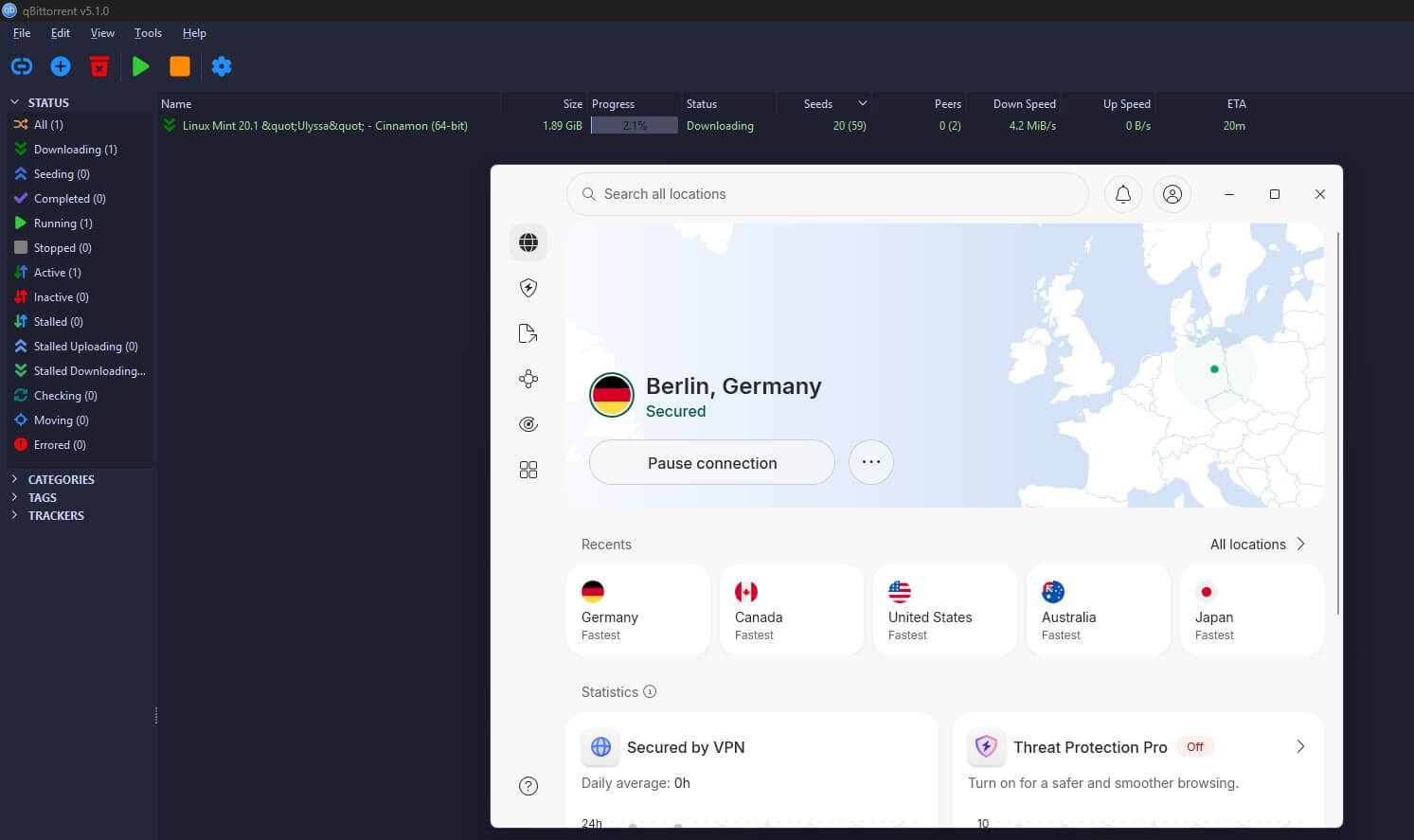
You can configure its SOCKS5 proxy directly in your torrent client for slightly faster downloads, and its Onion Over VPN servers can add privacy to P2P file sharing. These are incremental differences most users won’t notice. If you connect to a server and do your thing, both VPNs are reliable.
🏆 Winner: NordVPN
NordVPN has More Servers than Kaspersky VPN
Their server fleets are both large and diverse, which is a well-known recipe for success. NordVPN offers a little over 9,500 servers in 137 countries, whilst Kaspersky VPN has 6,000 servers in 120+ locations. Both use 10 Gbps server ports and offer dedicated servers, as outlined earlier.
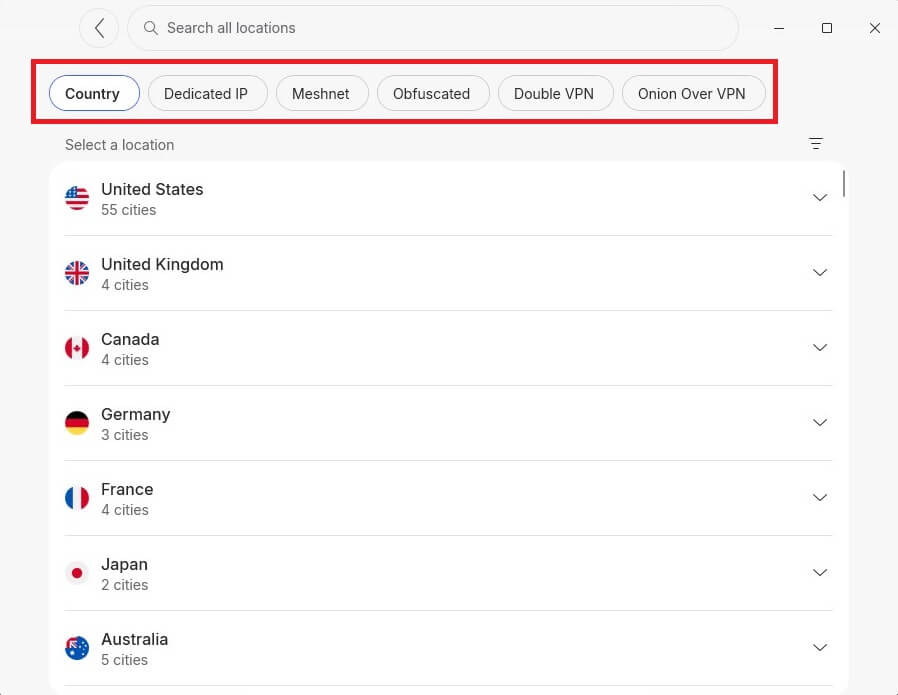
NordVPN comes with these server types:
- Obfuscated
- Onion Over VPN
- Double VPN
- Dedicated IP (it’s one of the best VPNs offering dedicated IP addresses)
Kaspersky VPN counters with these:
- Streaming
- Torrenting
- Gaming
- Double VPN
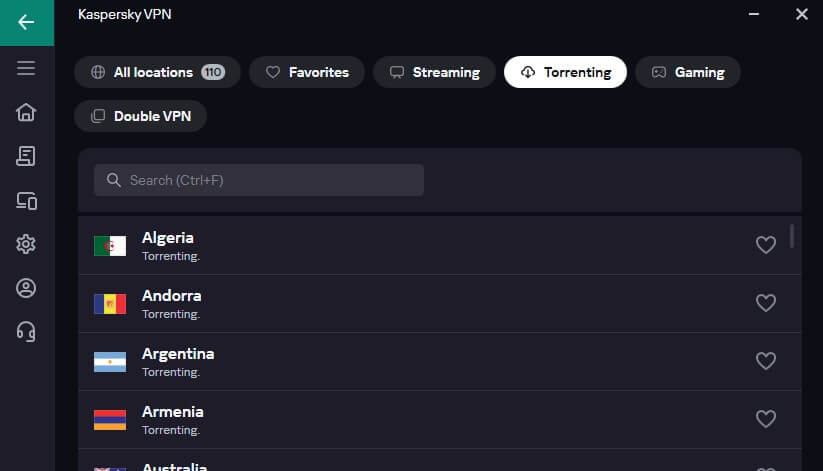
Kaspersky’s gaming servers are unique, but NordVPN answers with Obfuscated and Onion Over VPN servers, plus dedicated IP addresses you can buy on top. Server count alone doesn’t mean much to us, but a gap this large is worth noting: NordVPN has over 3,500 more servers and at least 17 more country locations than its rival.
🏆 Winner: NordVPN
NordVPN Works Better in Censored Regions
NordVPN wins this round because it works in China, thanks to many obfuscated servers. Reliability varies day to day, but in general, it can be set up to stay functional in China, Russia, the UAE, Qatar, and other censored regions, which makes it a solid pick for travel. Kaspersky VPN has an availability issue. It’s not available in all countries: Iran, Saudi Arabia, Belarus, Qatar, Pakistan, and Hong Kong.
Our testers in the USA couldn’t download it either, though for another reason entirely. Kaspersky has been banned in the country since 2024 over its alleged connections with the Russian government, the same issue we covered in the logging round.
🏆 Winner: NordVPN
Conclusion: NordVPN is Still Better than Kaspersky VPN
Kaspersky VPN snatched the pricing round, but everything else went NordVPN’s way, and most rounds weren’t even close. Still, credit to Kaspersky VPN for its valiant efforts. It’s a good VPN overall, with a favorable price tag, above-average streaming prowess, and advanced security features for the money. The problem is that NordVPN does everything Kaspersky can, only better. It has wider compatibility, more security features, faster speeds, and far more server locations.
Add the privacy edge, where Kaspersky VPN struggles and NordVPN shines, plus the ability to work in China, which Kaspersky simply doesn’t have in 2026. NordVPN costs more, but it’s the better investment in your online privacy and security. Save up if you need to. You won’t regret it.