Surfshark, NordVPN, and ExpressVPN have spent the last few years taking turns at the top of VPN rankings, ours included. That’s what makes choosing between them in 2026 genuinely difficult. The three haven’t drifted apart in quality; they’ve converged. All of them pass leak tests, hold recent independent no-logs audits, unblock streaming platforms, and have apps for every system you’d realistically use.
What separates them now are the details: speed, monthly cost, the extras you’ll actually turn on, and how each app feels after a week of use. In this Surfshark vs NordVPN vs ExpressVPN comparison, we rank all three from best to worst across 8 tests. Short version: NordVPN takes the overall win, but the margins are thin enough that your budget or platform could tip the answer to a different name.
Surfshark vs NordVPN vs ExpressVPN Compared
| Surfshark | NordVPN | ExpressVPN | |
| Our Current Ranking 📋 | #5 | #1 | #3 |
| Price 🤑 | Starting at $2.49/mo | Starting at $3.49/mo | Starting at $2.49/mo |
| Money-Back Guarantee 🪙 | 30 Days | 30 Days | 30 Days |
| Free Version/Free Trial 🆓 | No/7 days on iOS/Android | No/3 days on Android | No/3 days on iOS/Android |
| Logging/Jurisdiction 🕵️ | No/Netherlands | No/Panama | No/British Virgin Islands |
| Protocols 🌐 | OpenVPN, IKEv2, WireGuard, Dausos (macOS) | NordLynx, OpenVPN, NordWhisper, IKEv2 | OpenVPN, Lightway, WireGuard, Lightway Turbo |
| Servers 🏠 | 4,500 in 100 countries | 9,500 in 137 countries | 3,000+ in 105 countries |
| Specialty Servers ✅ | MultiHop, Static IP | Double VPN, Obfuscated, Onion Over VPN | Dedicated IP |
| RAM-Only Servers 🛡️ | Yes | Yes | Yes |
| Working With Netflix 📺 | Yes (30 catalogs) | Yes (25 catalogs) | Yes (15+ catalogs) |
| P2P Allowance ↔️ | Yes | Yes | Yes |
| Concurrent Connections 📟 | Unlimited | 10 | 10-14 |
Applications and Ease of Use
Among the three, ExpressVPN is the easiest to use, though NordVPN and Surfshark look a tad more modern. More on that below, but compatibility comes first. All three cover practically every device you own, from desktop and mobile to Smart TVs, the Fire TV Stick, Apple TV, and routers. So, compatibility-wise, you’ll have zero issues with Surfshark, NordVPN, or ExpressVPN.
Simultaneous connections are where the gap opens, and it favors Surfshark:
- Surfshark supports unlimited connections
- NordVPN supports 10 connections
- ExpressVPN supports 10 to 14 connections, depending on the plan
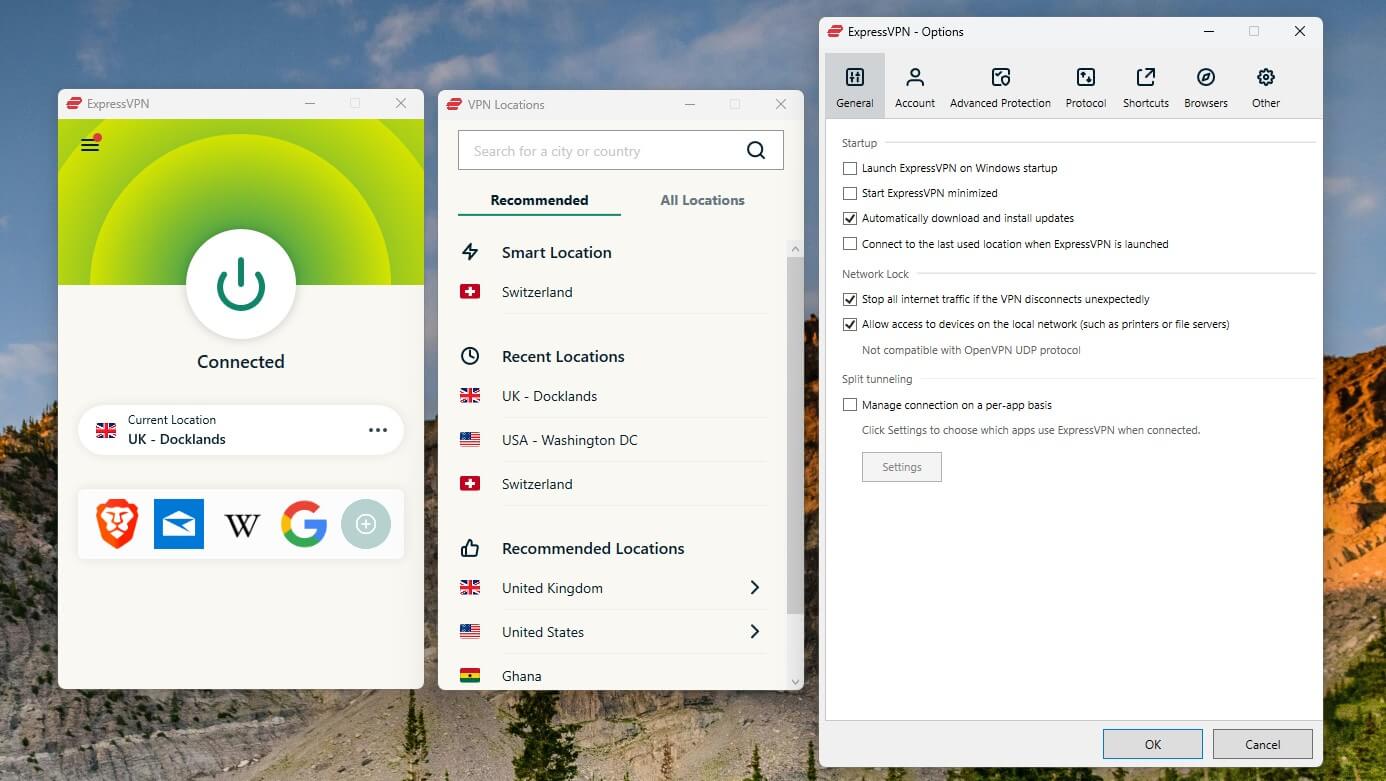
A note on ExpressVPN’s numbers: the Basic plan matches NordVPN’s 10, and you only reach 14 by stepping up to the Pro tier. That’s still a workable setup for one of the best-rated VPNs in 2026, but Surfshark hands you unlimited connections on its cheapest plan, no upsell involved. ExpressVPN is the friendliest pick for beginners. Its minimalist apps look and behave the same on every platform, and the full redesign it shipped in early 2026 made them even cleaner.
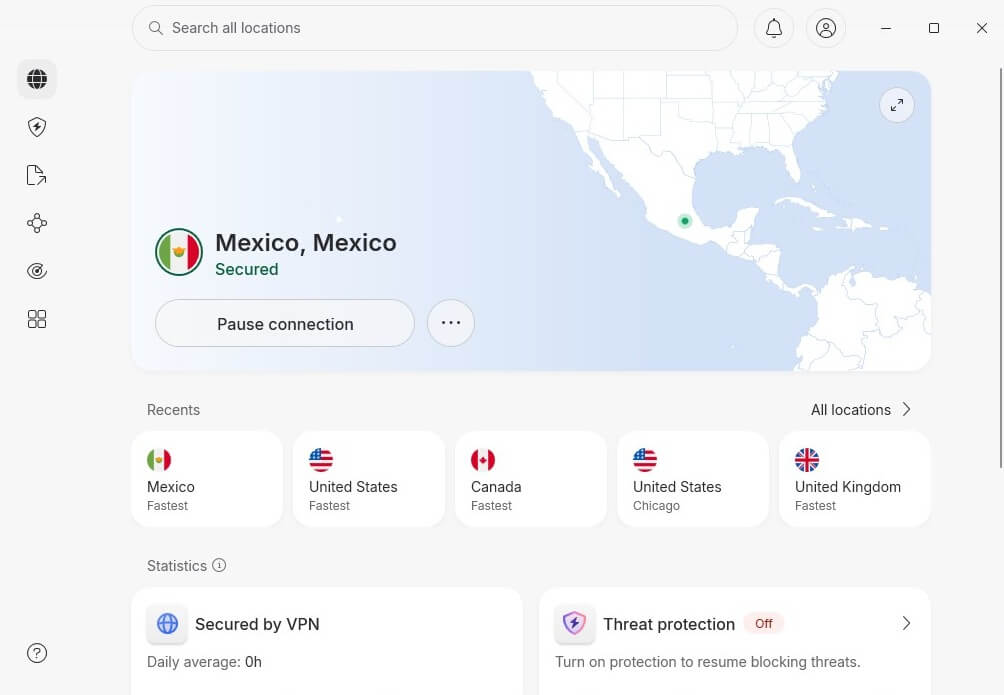
Then we have NordVPN, whose clients lean modern without burying the essentials. Windows and macOS apps got a fresh interface in April 2026, and the interactive server map reached iOS and Android a month earlier.
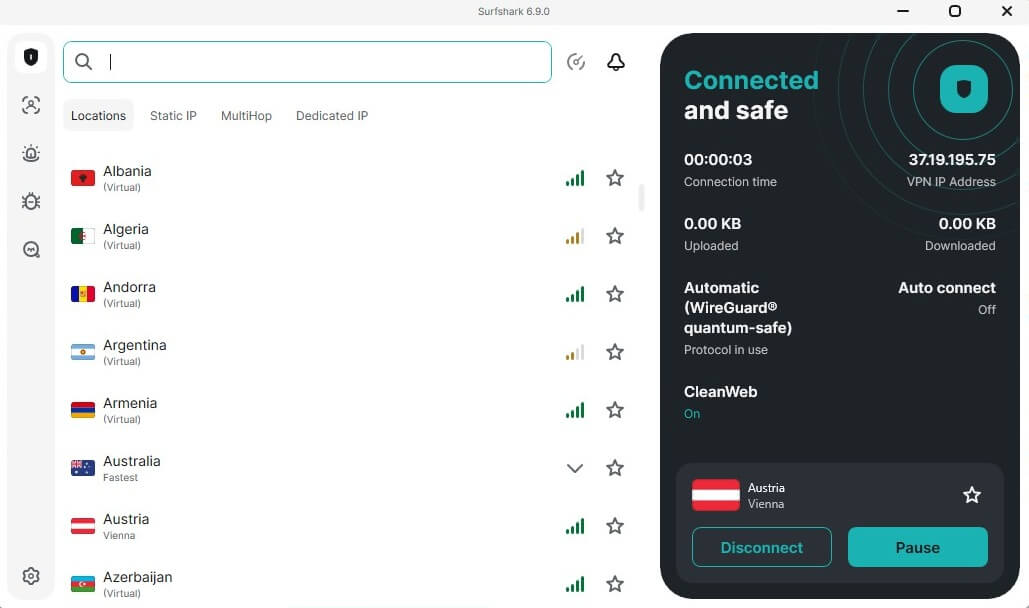
Surfshark’s apps might be the smoothest of the three, though NordVPN’s are slightly better-looking and easier to get around in our eyes.
To be clear, we use all three VPNs and have no complaints. Every app is quick and stable. But Surfshark takes this round: it pairs simple apps with unlimited connections at the lowest price of the trio. ExpressVPN is easier to use than both, yet caps connections unless you pay more. NordVPN sits comfortably between them.
The first round’s ranking:
- Surfshark (unlimited connections on every plan)
- NordVPN (10 connections at every tier, modern-looking apps)
- ExpressVPN (easiest apps, but 10 connections on the plan most people buy)
Surfshark vs NordVPN vs ExpressVPN Cost Comparison
We’ve seen their applications and concluded they’re some of the best around. Now it’s time to weigh what you actually get for your money with Surfshark, NordVPN, and ExpressVPN. Our team recently ran a Surfshark vs CyberGhost duel, where the two cost almost the same, and Surfshark still came out ahead. This time, the pricing picture is messier, and more interesting because of it.
| Biennial Plan Price | Annual Plan Price | Monthly Plan Price | |
| Surfshark | Starts at $2.49/mo | Starts at $3.39/mo | Starts at $16.45/mo |
| NordVPN | Starts at $3.49/mo | Starts at $5.49/mo | Starts at $14.99/mo |
| ExpressVPN | Starts at $2.49/mo | Starts at $4.99/mo | Starts at $15.99/mo |
The biennial race is tighter than it used to be. Surfshark and ExpressVPN both start at $2.49 per month on 2-year terms, while NordVPN now sits above them at $3.49. Sticker prices don’t tell the whole story. Surfshark’s 2-year Starter plan bills around $54 upfront and includes 3 free months, while ExpressVPN’s Basic charges roughly $78 for its first term with 4 free months.
Same monthly label, a $24 difference in what actually leaves your account. NordVPN’s 2-year plans sometimes come with 3 free months. Its annual plan is also the priciest of the three at $5.49 per month, with ExpressVPN at $4.99 and Surfshark comfortably ahead at $3.39. Surfshark’s 1-year plan throws in 3 free months as well. Monthly plans flip the script. NordVPN is the cheapest at $14.99.
ExpressVPN follows, and Surfshark charges the most at $16.45, so Nord is the rational pick if you need coverage for a month. A 30-day money-back guarantee covers all plans, which takes some sting out of the upfront billing. The entry tiers (Starter in Surfshark and Basic in NordVPN and ExpressVPN ) are VPN-only plans. Ad blocking, antivirus, password managers, and similar extras live in the tiers above.
And that now applies to all three since ExpressVPN moved to tiered pricing. ExpressVPN’s Basic remains the lightest on features, which tilts the value equation toward Surfshark and NordVPN if you plan to use the extras. Whichever way you lean, our list of the best VPN deals of 2026 is worth a look.
Which VPN is the Least Expensive?
Surfshark, and it’s not particularly close once you look past the biennial sticker price. One caveat before the verdict: NordVPN and Surfshark’s 2-year and 1-year plans come in several tiers, so they can cost considerably more than the entry prices we’ve covered in this Surfshark vs NordVPN vs ExpressVPN battle. Judged on the cheapest plans, though, the order is clear:
- Surfshark wins as the most affordable pick, with the cheapest annual plan, the lowest 2-year total, and unlimited devices included at every tier
- ExpressVPN matches Surfshark’s biennial rate on paper but bills more upfront, and its shorter plans cost noticeably more
- NordVPN now carries the most expensive long-term entry price of the three, winning only if you pay month to month
Security and Features: NordVPN Wins This One
Applications sorted and pricing settled, we’ve arrived at the round that matters most: what these three actually do to keep you safe. Spoiler for the impatient: NordVPN takes it, but the margins deserve a closer look.
Shared Features
The three providers overlap on most of the essentials, so you won’t find tons of uniqueness at this level. That’s not a complaint. We tested all three for IP and DNS leaks and found none, which is the baseline any premium VPN has to clear. That result comes from the standard security stack all three share:
- IPv6 and DNS leak protection
- 256-bit AES connection encryption
- Automatic VPN kill switch
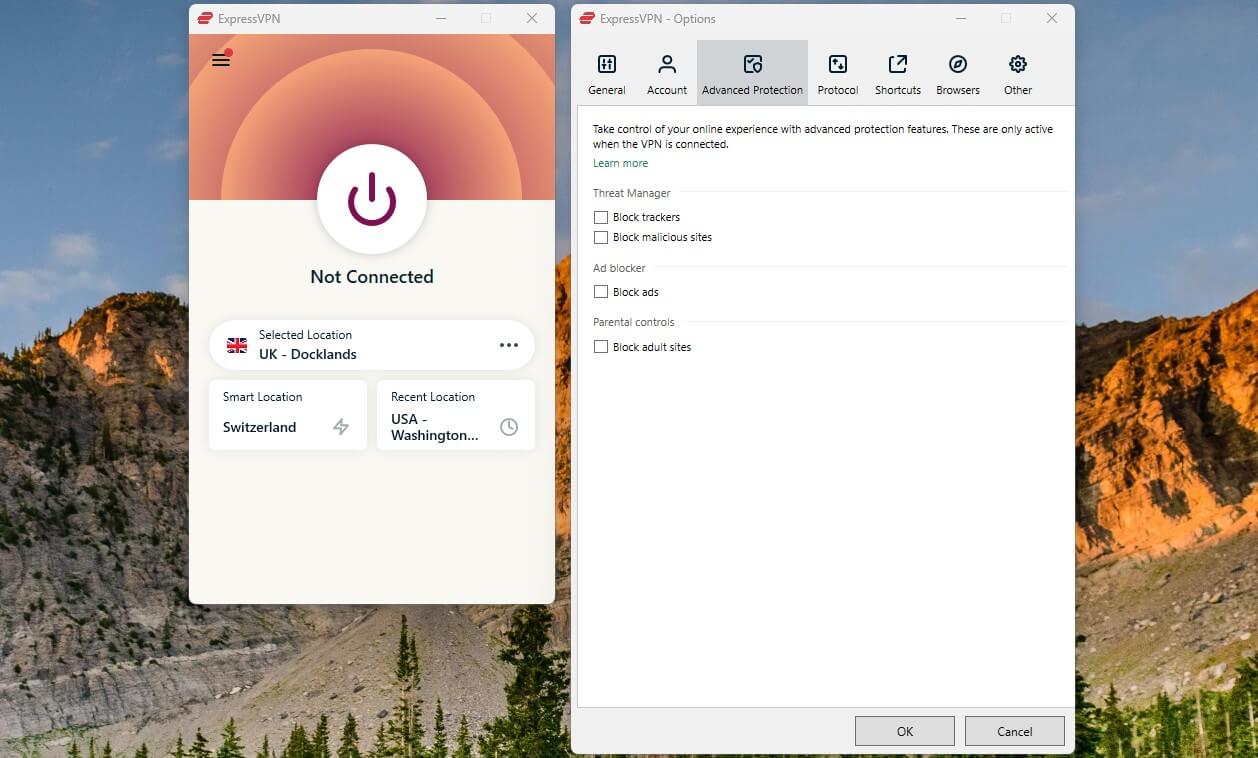
- Ad, tracker, and malicious site protection
- Servers based on RAM
- Private DNS
- Modern protocols (soon discussed)
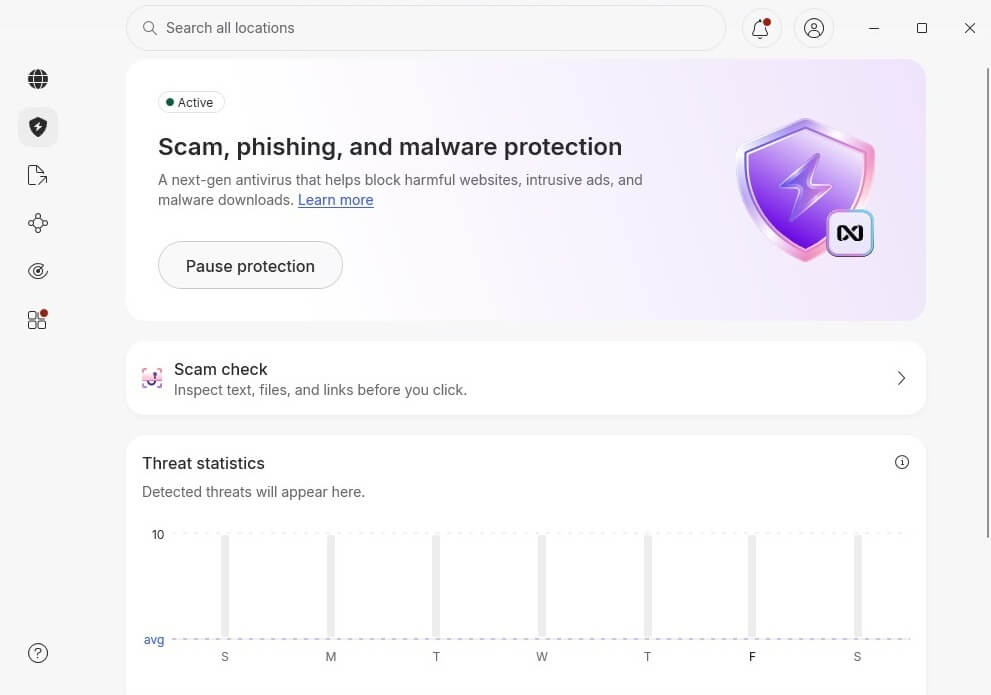
Even within these basics, a few differences emerge. NordVPN has the strongest kill switch setup because it’s one of the rare providers with an app-specific option, cutting traffic for chosen apps only instead of the whole device. Ad-blocking is another strong suit. In our testing, NordVPN blocks ads and trackers most efficiently, with ExpressVPN and Surfshark following closely.
The protocol situation got more interesting this year, too. We explained WireGuard and OpenVPN here, and while Surfshark long relied on the former, it now offers Dausos, its own protocol built around AEGIS-256X2 encryption, currently in beta on macOS. NordVPN and ExpressVPN have NordLynx and Lightway, respectively. NordLynx is WireGuard with the privacy gaps engineered out.
Lightway follows a more guarded recipe, rebuilt in Rust with post-quantum encryption baked in, and NordLynx supports post-quantum protection as well. All three protocols are fast and secure enough that you’ll forget which one you’re running. Surfshark and NordVPN share some features you won’t find in ExpressVPN:
- Double VPN, a.k.a. MultiHop
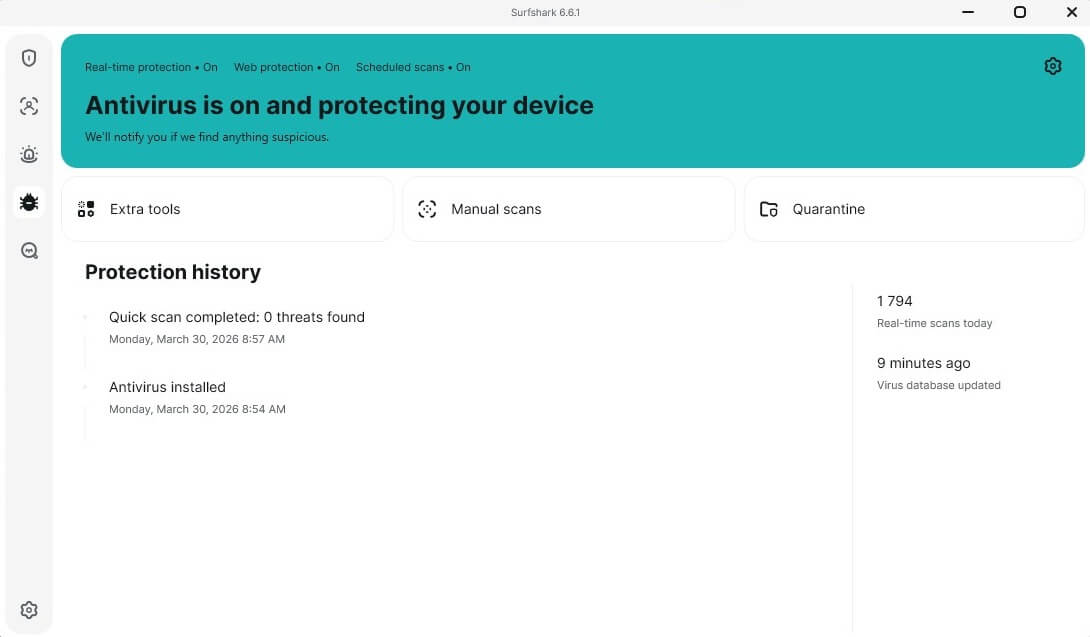
- Malware/virus protection
We outlined them in our separate reviews of Surfshark and NordVPN. As for data removal and identity protection, all three now reserve those for their most expensive plans (NordVPN Prime, Surfshark One+, ExpressVPN Pro), and the identity tools are limited to subscribers in the United States.
Unique Features of Each VPN
The previous ExpressVPN vs NordVPN vs Surfshark sub-section covered almost all of their security features. Still, each provider has its own personality, and a few tools deserve the spotlight:
IP Rotation and Alternative ID (Surfshark)
Surfshark’s IP Rotation tool switches your IP address periodically without dropping the connection or changing your chosen location. It’s a simple, effective way to make tracking harder. Alternative ID is another privacy tool we like.
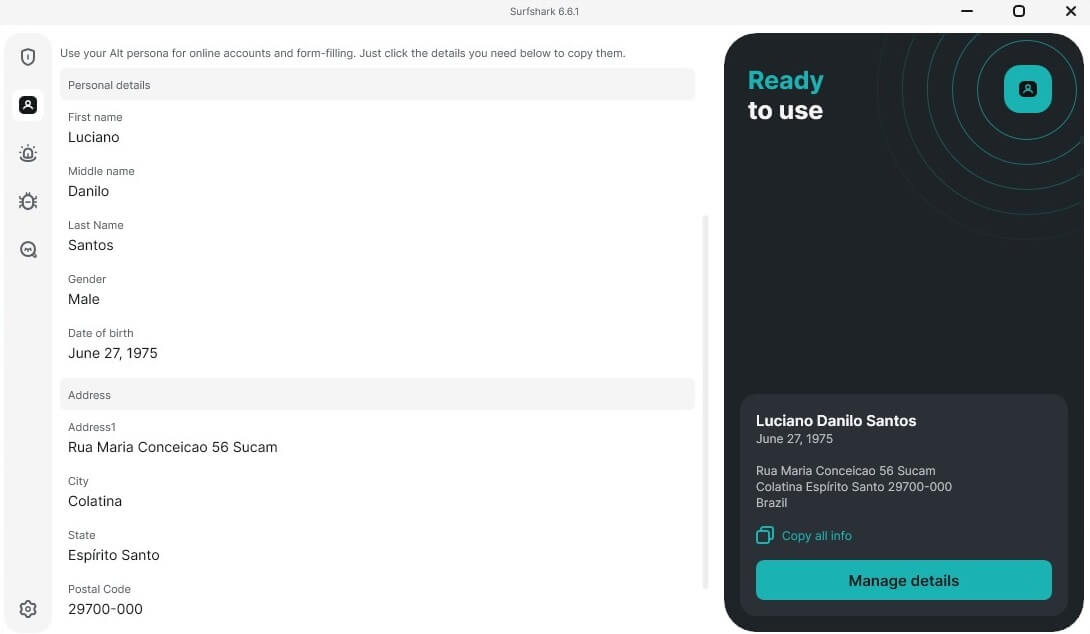
It generates a fake identity for you, with a different name, address, and credentials you can use for online signups. Your real details stay out of marketing databases, and the inevitable spam lands somewhere that isn’t your actual inbox.
Meshnet (NordVPN)
NordVPN’s Meshnet is unique to this provider, and best of all, it’s free. You don’t even need a NordVPN subscription to use it. Meshnet covers remote device access, fast and encrypted file sharing, and hosting LAN parties for gaming or business, with up to 60 devices linked at once.
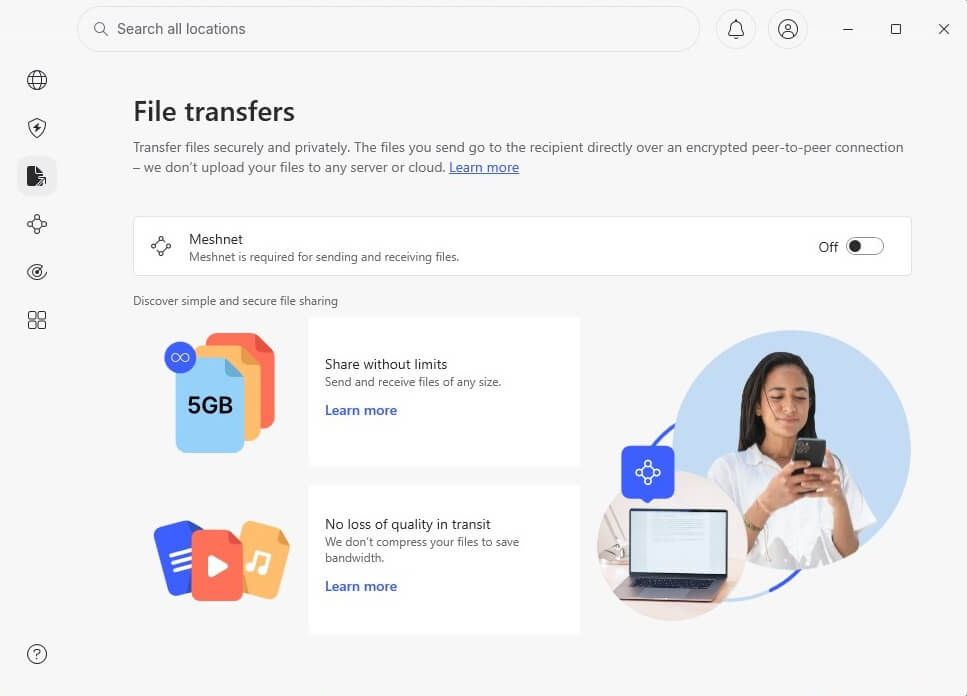
Need a file from your home PC while traveling? Access it directly. There’s also IP routing, which lets you borrow another device’s IP address and use it to unblock streaming services like Netflix or BBC iPlayer from wherever you are.
Keys and Parental Control (ExpressVPN)
ExpressVPN’s “unique” tool isn’t so unique. The ExpressVPN Keys password manager is genuinely good and works across mobile and desktop, but it’s no longer included with every subscription. Since ExpressVPN moved to tiered pricing, Keys comes with the Advanced and Pro plans only, and we’ve tested standalone password managers that perform somewhat better.
Parental Control fares better. It’s efficient at blocking adult sites, which helps households with kids, though there’s no filtering for gambling sites, social media, or other categories parents might want covered.
All three offer a number of well-built security extras, but the ranking is clear:
- NordVPN: the best and widest security feature set overall
- Surfshark: strong device security, with antivirus included across desktop and Android
- ExpressVPN: fewer advanced security features than its rivals, especially on the Basic plan
We must point out that all three are among the safest VPNs you can use. Still, at ExpressVPN’s price, we’d like to see MultiHop and virus protection make an appearance.
No Logging, Several Audits: All 3 Are Completely Clear
Whatever you’re spending on a VPN, privacy is the part you shouldn’t have to negotiate. Premium providers usually refrain from logging because their subscription revenue means they don’t need to sell your data. Such is the case with NordVPN, Surfshark, and ExpressVPN in 2026. They do reside in different countries:
- Surfshark’s legal jurisdiction is the Netherlands
- NordVPN’s legal jurisdiction is Panama
- ExpressVPN’s legal jurisdiction is the British Virgin Islands
NordVPN and ExpressVPN have “better” jurisdictions because both are offshore locations with privacy-friendly laws and no mandatory data retention. The Netherlands, meanwhile, belongs to the 9 Eyes alliance, an intelligence-sharing arrangement that also covers countries like the USA, the UK, and Canada. On paper, that’s a weaker starting position for Surfshark. The practice is different.
In practice, all three store only the minimal operational data needed to keep their services running. None of them retain logs of your IP address, DNS requests, browsing history, or traffic contents, and what little they do collect is stripped of identifying details and deleted promptly, usually once the connection ceases or within 30 days at most. Third-party audits back this up for all three, but not equally.
ExpressVPN has racked up the most audits across its apps, infrastructure, and privacy policy, with KPMG handling the most recent no-logs verification in February 2025. NordVPN counters with the strongest no-logs track record: Deloitte confirmed its policy for the sixth consecutive time in February 2026. Surfshark sits a notch behind with Deloitte no-logs audits from 2023 and 2025.
All three also run RAM-only servers with Private DNS and Perfect Forward Secrecy, features that complement a zero-log policy rather than replace it.
ExpressVPN wins on audit volume, NordVPN on audit consistency, and Surfshark carries the “worst” jurisdiction on paper. Yet none of that has translated into a single real-world incident we know of, and all three remain excellent privacy-focused VPNs in 2026. For this reason, this round is a tie.
NordVPN is the Fastest of the Three
NordVPN is the fastest of the three, and it wasn’t close in our testing. The Surfshark vs NordVPN vs ExpressVPN speed test is the round we always look forward to, but before the numbers, a quick word on procedure, which is simple. We test each VPN for 3 days in a row, 3 times a day, using UK, US, and Japanese servers. Our testing team sits in Belgrade, Serbia, so this selection is deliberate.
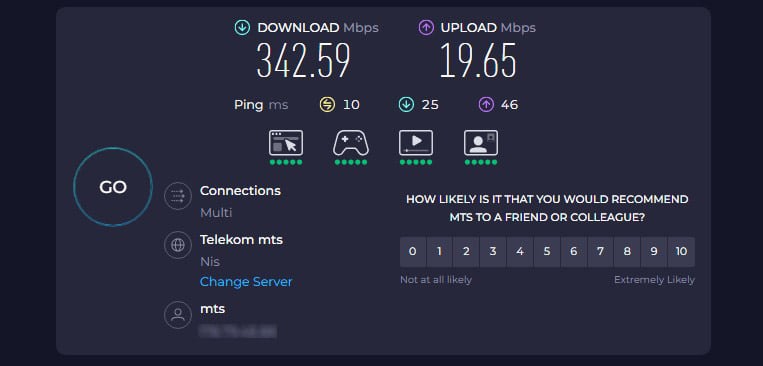
The table underneath displays the average speed losses of each VPN across all our test runs. From here on, we’ll use only average results, since they tell a better story than cherry-picking the best or worst runs from our VPN speed tests.
| Download Speed Loss | Upload Speed Loss | |
| Surfshark | 27% | 32% |
| NordVPN | 18% | 7% |
| ExpressVPN | 24% | 9% |
The download column already settles a lot. Surfshark and ExpressVPN finished almost on par, while NordVPN came out at least 6 percentage points ahead of both. Uploads widened the gap further: ExpressVPN and NordVPN posted near-identical retention; Surfshark lost nearly a third of its upload speed on average.
| Surfshark | NordVPN | ExpressVPN | |
| UK (Download/Upload) | 306.48/16.97 Mbps | 324.25/18.68 Mbps | 298.82/18.50 Mbps |
| US (Download/Upload) | 253.79/12.47 Mbps | 292.75/18.31 Mbps | 274.61/18.35 Mbps |
| Japan (Download/Upload) | 191.07/10.90 Mbps | 223.54/17.85 Mbps | 206.33/16.73 Mbps |
The averages above show just how well NordVPN preserves performance as distance grows; its lead over the pack is widest on the Japan route. Paired with the lowest latency of the three, that makes NordVPN a reliable pick for gamers on any platform, be it Windows, Android, iOS, or consoles.
Unlike the previous round, this one is clear-cut.
- NordVPN: the #1 VPN for speed and stability
- ExpressVPN: consistently quick, with uploads nearly matching Nord’s
- Surfshark: not terrible, but its speed retention trails the other two, especially on uploads
Streaming and Torrenting
This ExpressVPN vs Surfshark vs NordVPN comparison now segues into our streaming and torrenting tests. It should come as no surprise that all three perform like champs, but figuring out which one is the champ means hunting for tiny differences.
Streaming Performance
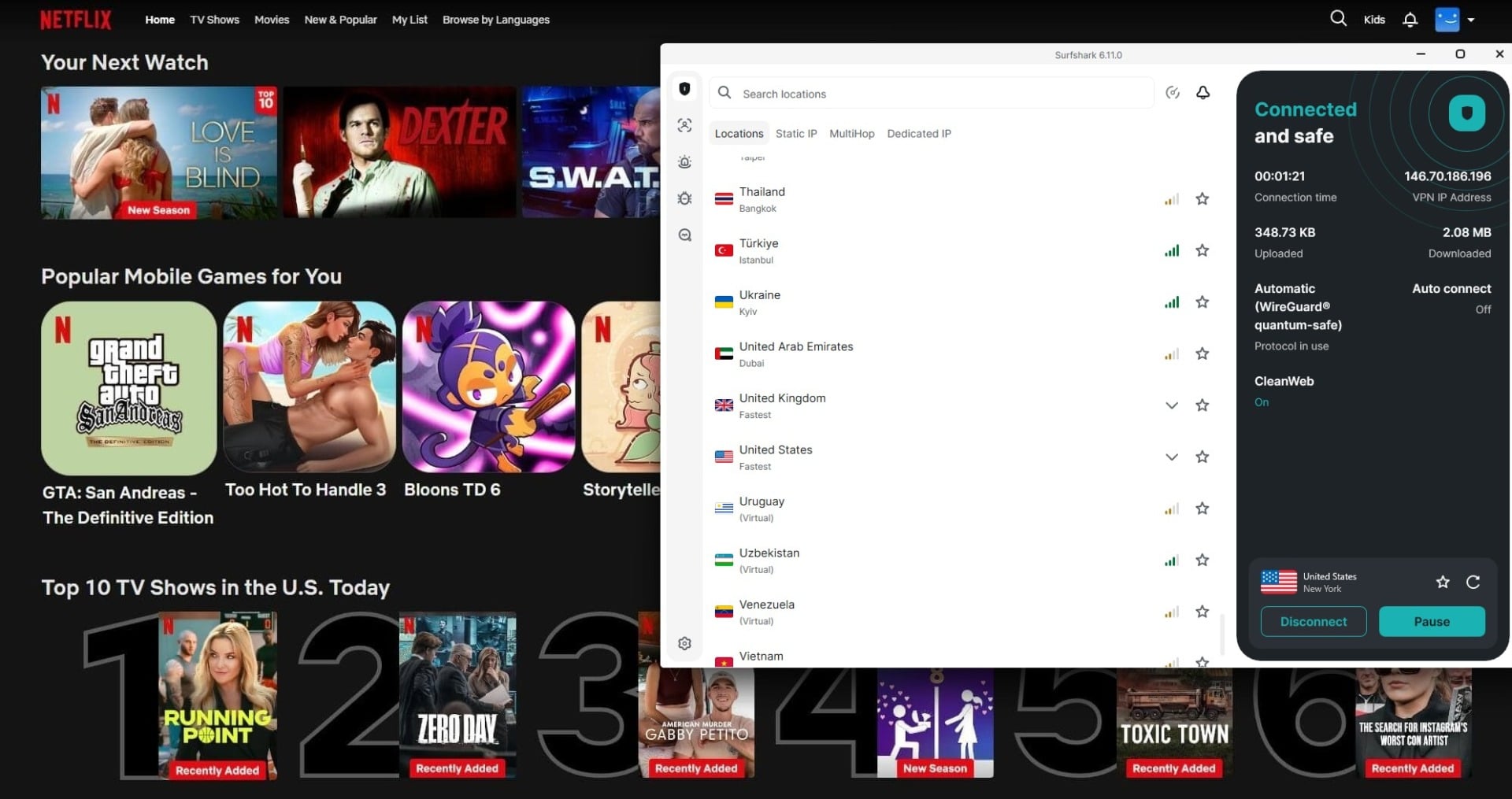
Having tested all three for streaming, we came away with little to complain about: each VPN unblocked every streaming platform we threw at it. Netflix was one of the easiest tasks for the trio, and BBC iPlayer, Max, and a few dozen foreign TV channels fell just as quickly. We did notice one trend: NordVPN and Surfshark were more efficient at unblocking Netflix libraries overall.
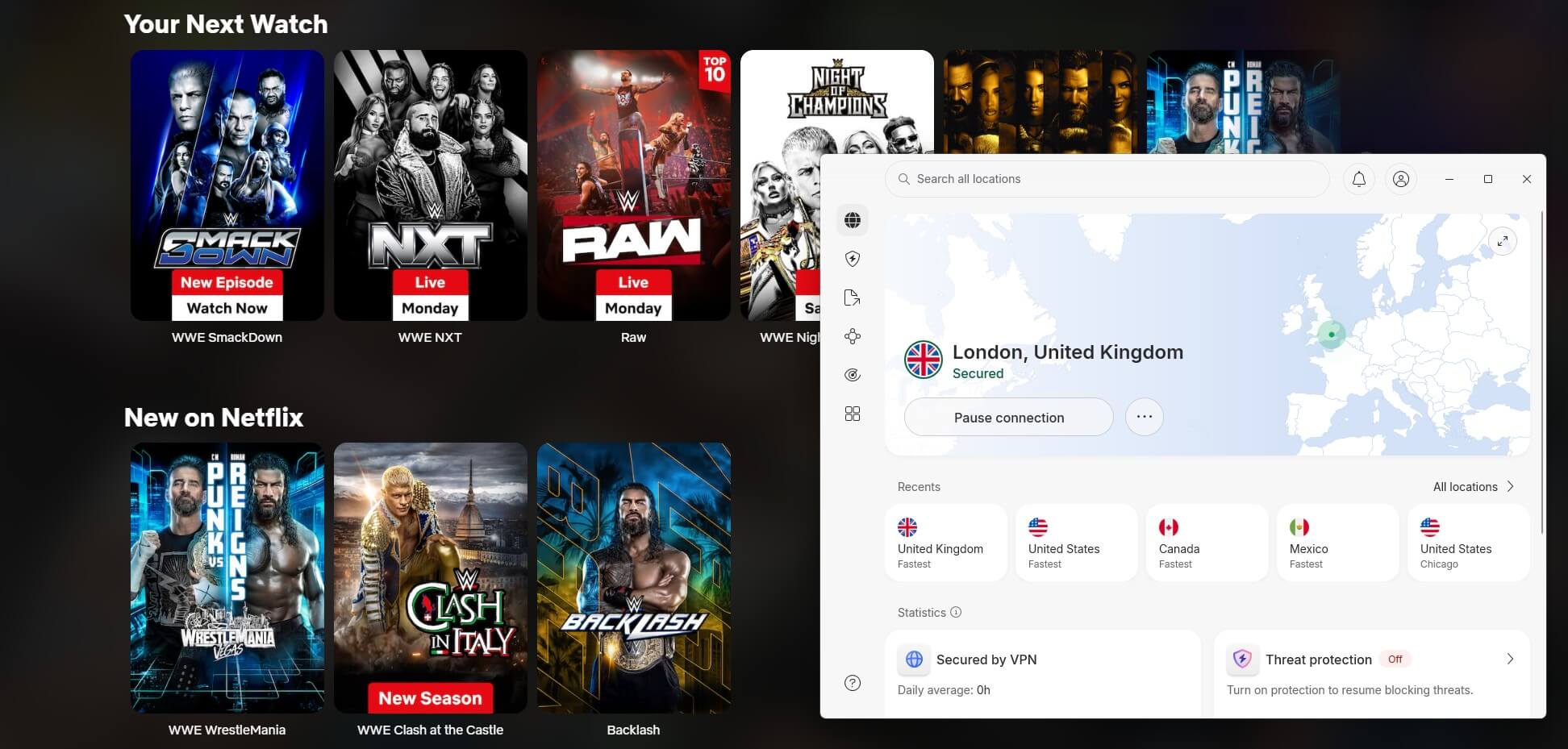
Both reached around 25-30 regional catalogs in our tests, while ExpressVPN managed roughly 15. Either number covers what most viewers need, but as said, details decide this comparison. NordVPN was the smoothest, holding 4K streams, no buffering. ExpressVPN repeated its speed-test form, while Surfshark’s average speed took a hit when we used an Australian server to unblock SBS.
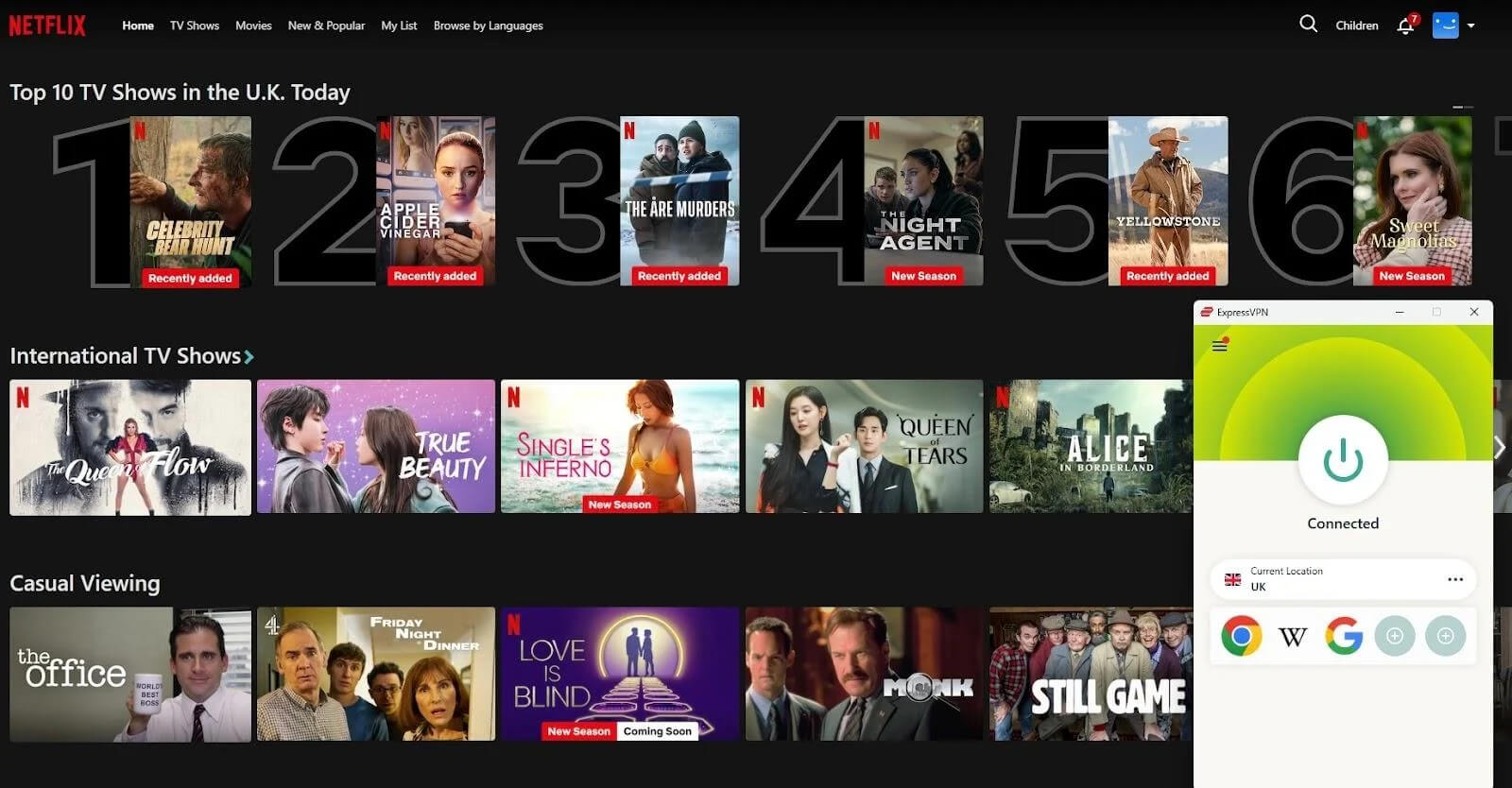
Each also offers SmartDNS (except Surfshark, which has discontinued it) for devices that can’t run VPN apps, plus browser extensions with location spoofing and WebRTC leak protection, so unblocking works beyond the desktop and mobile setups. The results favor NordVPN, with Surfshark second and ExpressVPN behind.
Torrenting Performance
Torrenting was easy with all three. Every server in each fleet is P2P-friendly, so there are no special locations to hunt for: connect anywhere and start seeding. What separated them in our tests was speed, and NordVPN was the fastest of the three, keeping downloads moving with pretty much no speed reduction on nearby servers. We’re sad to see that none of them offer port forwarding.
But NordVPN has a SOCKS5 proxy, which can be configured to work with uTorrent. SOCKS5 is fast and efficient but lacks encryption, though it still masks your IP address. We suggest using it with caution.
NordVPN is the best option of the three for streaming. For torrenting, NordVPN stays on top because of its speeds and the SOCKS5 option, which ExpressVPN and Surfshark lack. So, the ranking is as follows:
- NordVPN: the best of the bunch for both streaming and P2P
- Surfshark: a step behind NordVPN, but great for Netflix
- ExpressVPN: amazing, but it unblocks fewer Netflix libraries than its rivals
Server Locations
No miniature server networks here. All three VPNs run thousands of servers across at least 100 countries, and the precise counts are displayed below, so let’s dig deeper and see who comes out on top.
| Surfshark | ExpressVPN | NordVPN | |
| Servers | 4,500 | 3,000+ | 9,500+ |
| Countries | 100 | 105 | 149 |
NordVPN runs the largest network by a very wide margin, with ExpressVPN second and Surfshark third. The latter two are close, but ExpressVPN covers 5 more countries and, as we discovered, more city-level locations, over 160 in total. Server variety also lands on NordVPN’s side. Surfshark has dedicated IP and static IP servers. ExpressVPN only offers the former, for example.
NordVPN counters with dedicated IP, Double VPN, Onion Over VPN, and Obfuscated servers. We covered a few of these already, except for Onion Over VPN and Obfuscated. The former makes the VPN a strong pick for the dark web; obfuscation helps get around censorship, which we’ll address in a minute. All providers use 10 Gbps server ports, so speeds and overall performance are no issue.
Considering their server fleets and the quality of each, the placing is:
- NordVPN: the largest and most diverse server network of the three
- ExpressVPN: fewer servers than its rivals, but the 105-country, 160-location spread beats Surfshark’s reach
- Surfshark: a bigger raw fleet than ExpressVPN at 4,500 servers, held back by the smallest country count
Which VPN Is Most Efficient at Bypassing Censorship?
NordVPN is the most efficient of the three at getting past censorship, though the gap behind it has changed shape this year. In 2026, many providers are flimsy against the Great Firewall: of everything we’ve tested, these three still perform well; Proton VPN and CyberGhost have dropped out of the running entirely. The most reliable option remains Astrill VPN, but that provider, as you know, is very expensive.
So, out of the three, which VPN is best to use in China, Turkey, Russia, and other censored regions? NordVPN keeps the top spot thanks to its obfuscated servers, which have held up through the firewall’s recent tightening.
The bigger story is Surfshark. Its NoBorders mode paired with IP Rotation has improved markedly in recent testing, connecting faster and holding sessions longer than it used to, enough to leapfrog ExpressVPN in our current ranking. That’s no knock on ExpressVPN. Its obfuscation is built into Lightway and switches on automatically, with no settings to dig through each time you want to connect.
This makes it the easiest of the three to use in a restricted country. It simply trailed the other two on connection speeds in our latest round. As for Russia, Turkey, the UAE, Qatar, and similar regions, all three perform reliably, and our testers there have had zero issues.
The NordVPN vs ExpressVPN vs Surfshark censorship comparison ends like this:
- NordVPN is the most efficient for bypassing censorship
- Surfshark has closed the gap fast, with NoBorders and IP Rotation now performing at near-Nord levels
- ExpressVPN remains dependable and the simplest to use, but its speeds behind the firewall trail its rivals
Conclusion: NordVPN Is the Best Choice
As this is a three-way Surfshark vs. NordVPN vs. ExpressVPN comparison, we can’t just bluntly tell you to pick one and ignore the rest. The podium shuffled across our eight tests, but NordVPN comes out as the most impressive option, taking security, speed, streaming, servers, and censorship bypassing outright. Second place needs explanation. Surfshark won the value rounds: lowest price, unlimited connections, Netflix reach to match Nord’s.
But its stumbles were performance fundamentals, while ExpressVPN’s were extras and cost. Since raw performance, jurisdiction, and audit history weigh more in our rankings than the price tag, Express keeps the silver.
- NordVPN is the best overall choice at the price. It’s the most complete, no-nonsense package, with virtually no “potholes” or pronounced downsides.
- ExpressVPN is our second favorite. Pricier and lighter on extras, but second-fastest, broader country coverage than Surfshark, the deepest audit record, and apps a beginner can’t get lost in.
- Surfshark takes third by our weighting, yet it’s first by a mile on value. If budget is your deciding factor, read this ranking bottom-up.
All three come with a 30-day money-back guarantee, so the cheapest way to settle your own comparison is to install one tonight. If it disappoints, trying the next name costs you nothing with a refund you can get.