A few years ago, this comparison went straight to ExpressVPN. It no longer does. Proton VPN has grown its network past 20,000 servers, fixed the streaming problems that used to cost it points, and still undercuts ExpressVPN on price while offering the only free plan we’d actually recommend to anyone. Proton VPN wins 5 rounds to 3. ExpressVPN keeps three genuine advantages, and they may still decide it for you. All eight rounds are below. Keep reading.
ExpressVPN vs Proton VPN Compared
| Proton VPN 🏆 | ExpressVPN | |
| 📋 Our Current Ranking | #2 | #3 |
| 🔖 Prices | Starts at $2.99 monthly | Starts at $3.49 monthly |
| 💸 Money-Back Guarantee | 30 days for all plans | 30 days for all plans |
| 🆓 Free Version/Free Trial | Yes/No | No/7 days |
| 📓 Logging/Jurisdiction | No logging/Switzerland | No logging/British Virgin Islands |
| 🔐 Protocols | WireGuard, OpenVPN, Stealth | WireGuard, Lightway (Turbo), OpenVPN |
| 🌐 Servers | 20,000+ in 148 countries | 3,000+ in 113 countries |
| 🔝 Specialty Servers | Tor Over VPN, Torrenting, Secure | Dedicated IP |
| ⛔ Ad Blocking | Yes, NetShield, DNS-based | Yes, Advanced Protection, DNS-based |
| 💾 RAM-Only Servers | No, full-disk encryption | Yes |
| 📺 Working With Netflix | Yes, all major catalogs | Yes, most major catalogs |
| 🔽 P2P Allowance | Yes, all servers | Yes, all servers |
| 📱 Concurrent Connections | 10 | 10-14 |
Apps and Ease of Use
Platform coverage is level. Windows, macOS, Linux, iOS, Android, Fire TV, Apple TV, Smart TVs, and router clients are covered by both.
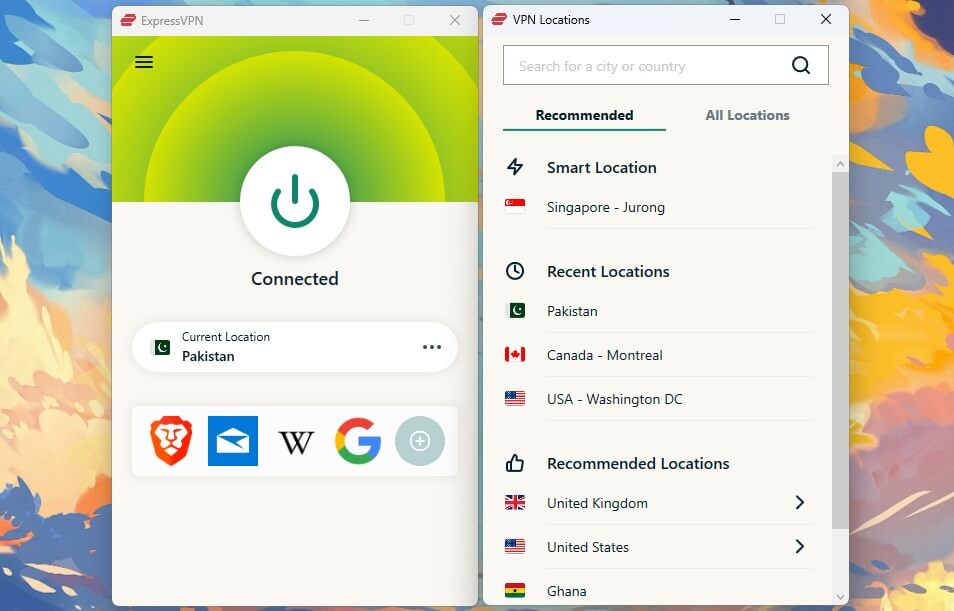
ExpressVPN’s app is the easier one to hand to someone who has never used a VPN. One button, one location list, identical layout on every device. Connections establish quickly, and nothing asks you to make a decision you don’t understand.
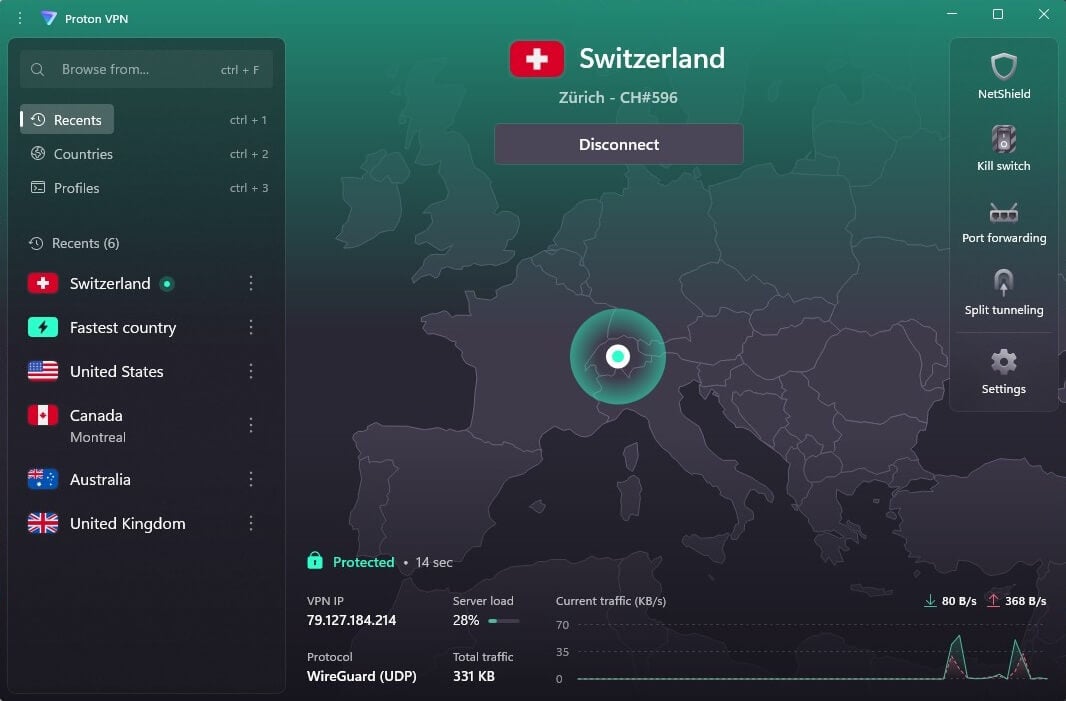
Proton VPN puts its server list beside the map, with tabs sorting Secure Core, P2P, and Tor servers. Settings open inside the main window instead of a separate one, removing the clumsiest part of the old desktop client. It still surfaces more choices than ExpressVPN does, six protocols among them, and that suits people who want the control more than those who don’t.
Its mobile apps are excellent, and the free Android client is the best in its class. Device counts have flipped since our last test. ExpressVPN moved from 8 connections to 10 on Basic and up to 14 on Express Pro, so Proton’s fixed 10 no longer leads.
🏆 Winner: ExpressVPN
Proton VPN is Cheaper Than ExpressVPN: Price Compared
Proton VPN sells three plans. The 24-month Plus plan at $2.99/mo is the one to take, with the annual at $3.99/mo and monthly at $9.99/mo above it. ExpressVPN restructured into three tiers. Basic on the 2-year term costs $3.49/mo at 73% off with four free months, and higher tiers reach $7.49/mo. Prices move often, so check the current ExpressVPN coupon before buying.
| 2-Year Price | 1-Year Price | Monthly Price | Renewal Price | |
| ExpressVPN | $97.72 (28-month price, with 4 free months) | $74.85 (15-month price, with 3 free months) | $14.99 | $99.95/year for Basic plan, more for higher plans |
| Proton VPN | $71.76 | $47.88 | $9.99 | $83.88/year |
Renewal is where the gap widens. ExpressVPN Basic renews at $99.95/year, $8.33/mo, well above Proton VPN’s equivalent: Only $83.88/year.
Then there’s the free plan. Proton VPN is the only provider here with one, and it carries no data cap. You’re held to one device, a short country list, throttled speeds, and no P2P, but you can test the service indefinitely without paying. ExpressVPN counters with a 3-day trial on iOS and Android. Both refund within 30 days.
🏆 Winner: Proton VPN
Proton VPN is More Secure Than ExpressVPN
Here’s the part where Proton VPN is unbeatable, and here’s why.
Shared Features: Only the Fundamentals
- 256-bit encryption
- Automatic kill switch
- IP and DNS leak protection, with no leaks detected in testing
- Split tunneling
- Ad and tracker blocking (DNS-level), via NetShield and Advanced Protection. NetShield blocked 97%, while Advanced Protection blocked 94% of ads in our tests with AdBlock Turtlecute.
- OpenVPN and WireGuard support
ExpressVPN adds parental controls that block adult sites by category, which you can switch off to reach blocked sites if you’d rather it didn’t.
Advanced Features: Where Proton VPN Truly Shines
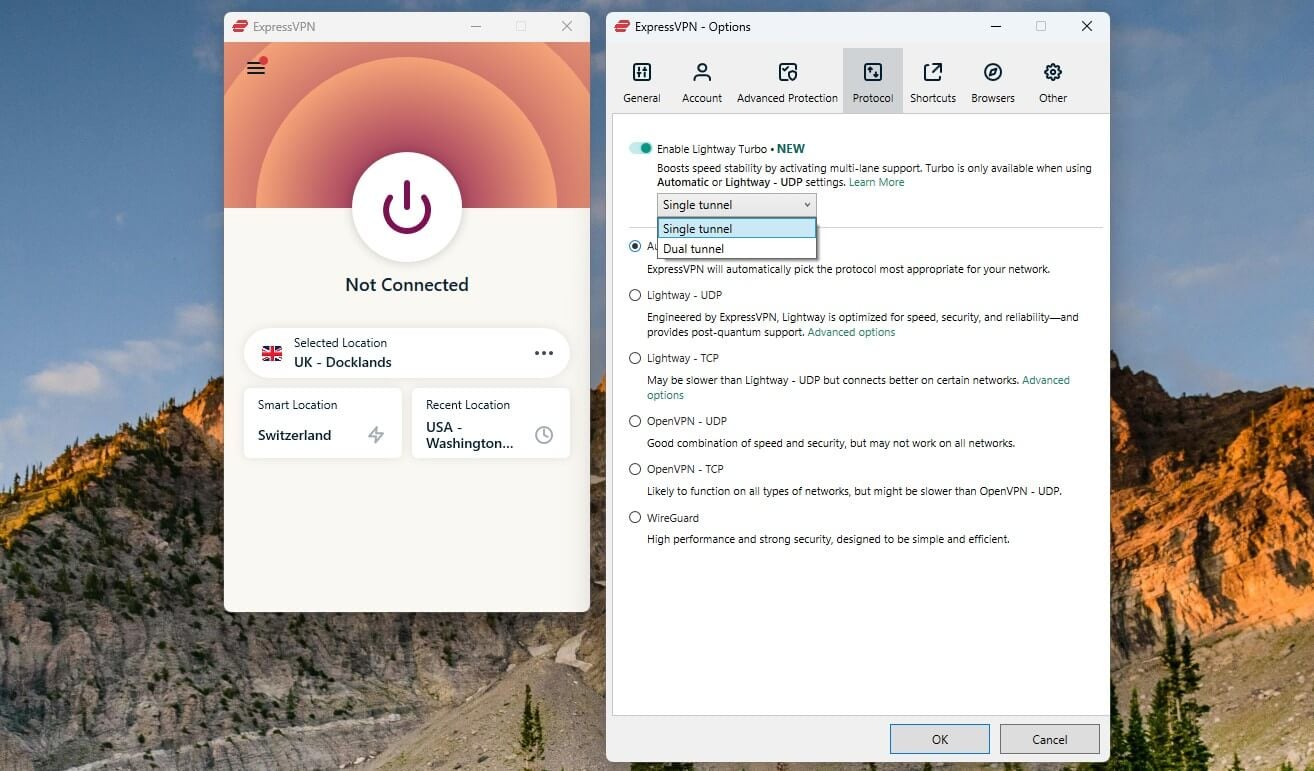
ExpressVPN’s exclusives start with Lightway, rewritten in Rust, and its multi-lane Turbo variant. It’s the faster protocol, and it has post-quantum protection, which Proton VPN has not shipped yet. ExpressVPN also offers a dedicated IP from $2.49/mo, Smart DNS for devices that can’t run VPN software, and Identity Defender for US subscribers on higher tiers.
Proton VPN’s exclusives run deeper on the VPN itself. Secure Core routes you through a Proton-owned server in a privacy-friendly country before the exit point, encrypting twice. Tor over VPN servers reach .onion sites without a separate browser. Stealth, its obfuscation protocol, disguises VPN traffic, and port forwarding lifts torrent throughput. WireGuard handles the rest, and it outpaces OpenVPN on both counts.
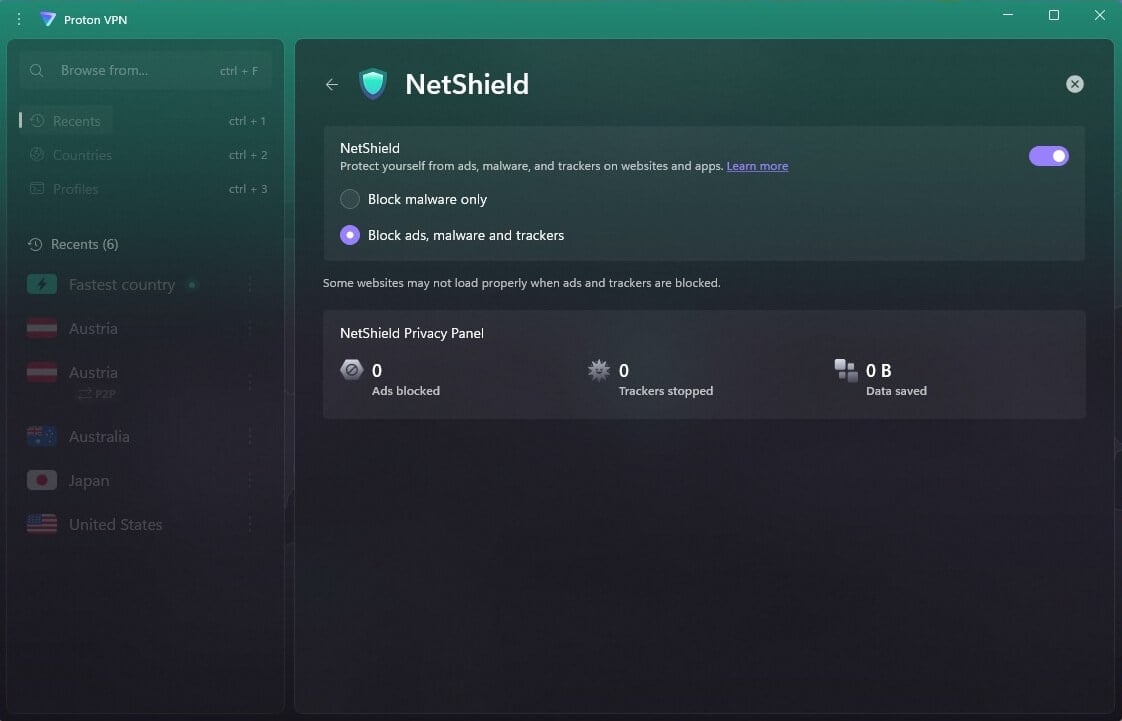
The biggest difference doesn’t appear in either app: every Proton VPN app is open-source and independently audited. Anyone can read the code. ExpressVPN publishes audit reports instead, which ask you to trust the auditor rather than check yourself.
| Feature | ExpressVPN | Proton VPN |
|---|---|---|
| Proprietary Protocol | Yes, Lightway ✅ | Yes, Stealth ✅ |
| Post-Quantum | Yes ✅ | No ❌ |
| Dedicated IP | Yes ✅ | No ❌ (Business only) |
| Multi-hop | No ❌ | Yes ✅ (Secure Core) |
| Tor Over VPN | No ❌ | Yes ✅ |
| Smart DNS | Yes ✅ | No ❌ |
| Port Forwarding | No ❌ | Yes ✅ |
| Open-Source Apps | No ❌ | Yes ✅ |
🏆 Winner: Proton VPN
Privacy, Logging, and Transparency Compared: Proton VPN Wins
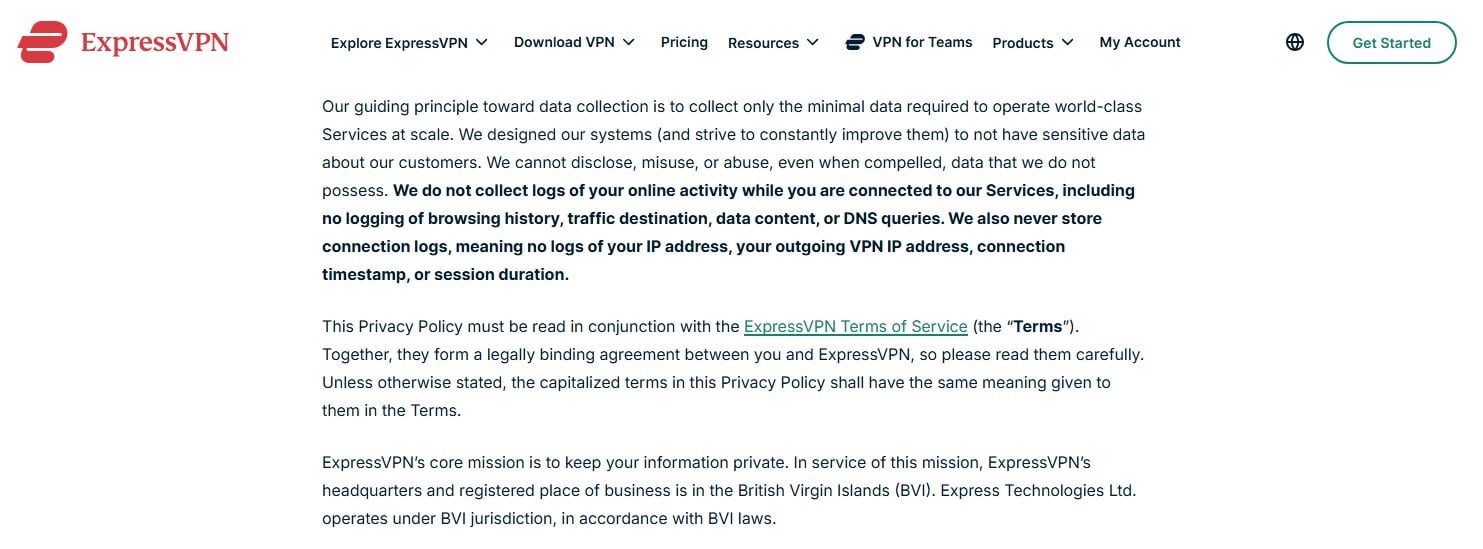
Neither keeps logs. The difference is in how much you have to take on faith. Neither VPN stores IP address, DNS queries, browsing history, location data, or detailed connection timestamps. Both retain an email address and anonymized telemetry, which is standard and can’t be tied back to you.
ExpressVPN operates from the British Virgin Islands, outside intelligence-sharing alliances, with several KPMG audits on its no-log policy (mid-2025) and RAM-only TrustedServer infrastructure that wipes on reboot. That RAM-only architecture is a concrete advantage: Proton VPN uses full-disk encryption instead.
Proton VPN operates from Switzerland, outside the 5, 9, and 14 Eyes, under privacy law that predates the internet. Its no-logs policy has passed independent audit, and Swiss courts have previously ruled that VPN providers there aren’t bound by the data retention rules applied to telecoms. What settles it is verifiability.
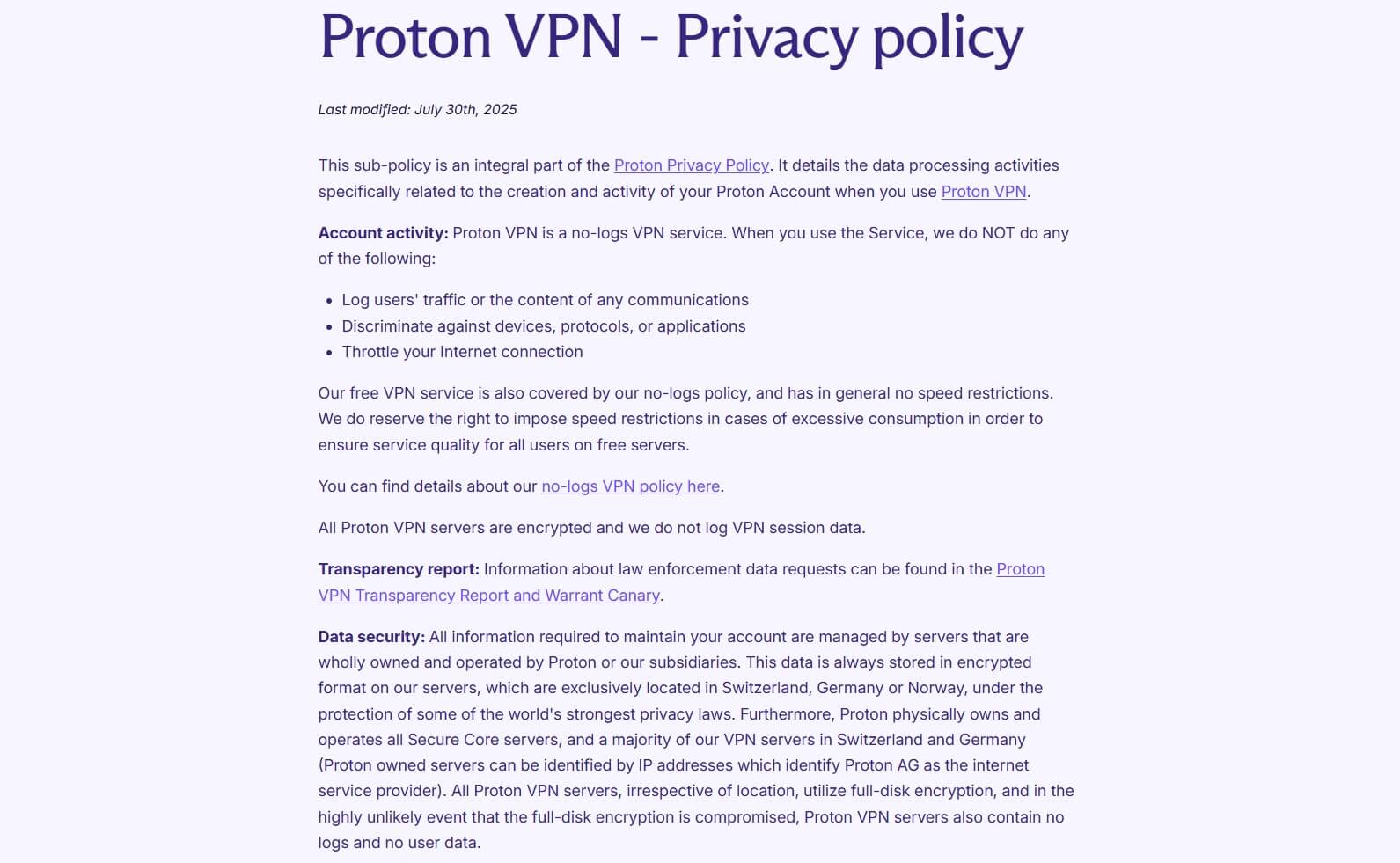
Proton VPN publishes every client’s source code, so its no-logging claim can be inspected rather than attested to. Neither has ever handed over user data, unlike IPVanish in its 2017 case. Open-source clients and Swiss jurisdiction beat a larger audit count. ExpressVPN’s RAM-only servers are the better piece of infrastructure, and this round is closer than the result suggests.
⚖️ Winner: Proton VPN
ExpressVPN is Faster than Proton VPN: October Speed Test
Our testing ran from Southeastern Europe over three days, three tests daily, across UK, US, and Japan servers, with protocol selection left automatic.
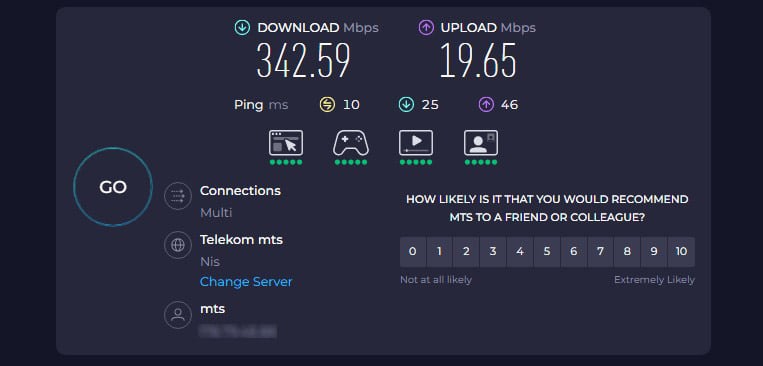
Lightway Turbo pulls away over distance, holding 72% more download throughput than Proton VPN on the Japanese server. Proton VPN is quick enough for 4K and gaming on nearby servers, and it trails NordVPN by a smaller margin, but the numbers favour ExpressVPN everywhere.
| Download Speed Loss | Upload Speed Loss | |
| Proton VPN | 43% | 21% |
| ExpressVPN | 24% | 9% |
Proton VPN shipped a rebuilt WireGuard codebase in beta on Windows and Android in mid-2026, aimed squarely at this weakness. However, after retesting it in October, it was still slower than ExpressVPN’s Lightway Turbo.
| UK (Download/Upload) | US (Download/Upload) | Japan (Download/Upload) | |
| Proton VPN | 195.66/18.47 Mbps | 260.69/11.56 Mbps | 119.74/16.21 Mbps |
| ExpressVPN | 298.82/18.50 Mbps | 274.61/18.35 Mbps | 206.33/16.73 Mbps |
🏆 Winner: ExpressVPN
Streaming and Torrenting Comparison: What Changed
This is the round that flipped. ExpressVPN remains dependable, clearing most major Netflix regions plus Hulu, Max, and Prime Video, and its Smart DNS (MediaStreamer) reaches consoles and older TVs that can’t install a VPN. Proton VPN has no equivalent, which is a genuine gap.

Everything else has changed. On retesting, Proton VPN opened every major Netflix catalog we tried, along with the platforms that used to defeat it. Its streaming-optimized servers now behave as advertised rather than needing three attempts, and ESPN Plus and Sky Sports both worked without fuss.

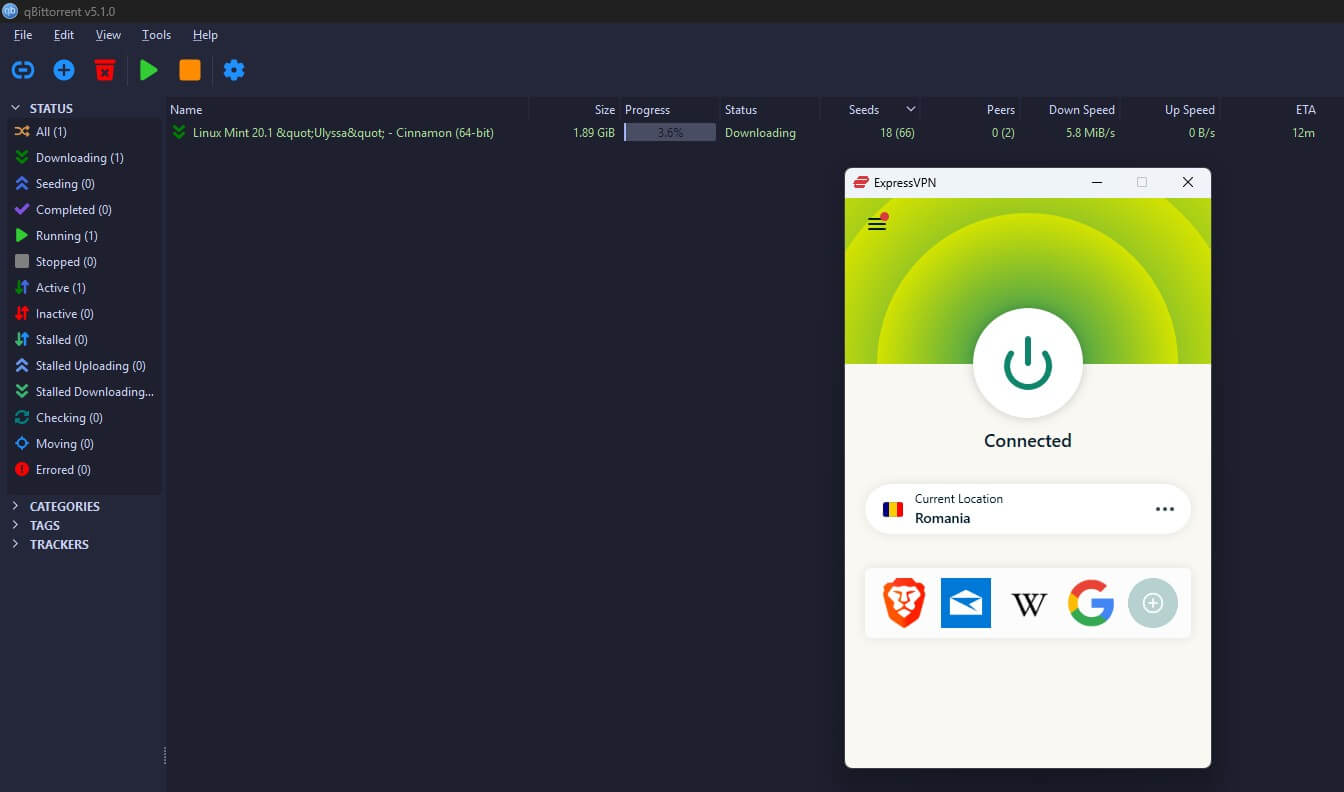
Torrenting follows the same shape. Both allow P2P across the whole network, but Proton VPN adds dedicated P2P servers and port forwarding, which ExpressVPN doesn’t offer and which measurably improves swarm connectivity.
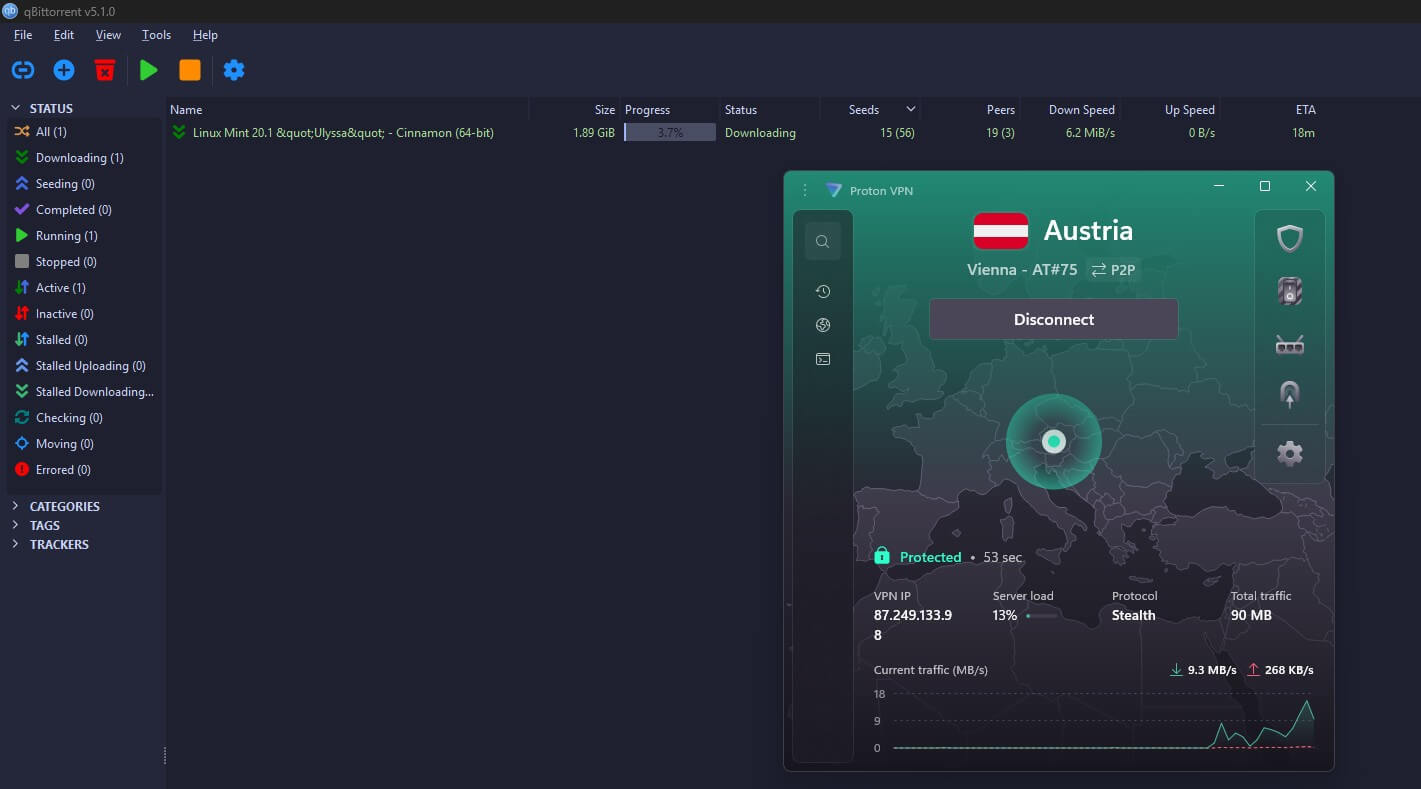
The one restriction is that P2P stays off the free plan. Our torrenting VPN guide explains why port forwarding matters.
🏆 Winner: Proton VPN
Full Netflix coverage plus port forwarding. ExpressVPN keeps Smart DNS, so pick it if you stream mainly on hardware that can’t run a VPN app.
Proton VPN Has More Servers Than ExpressVPN
- Proton VPN has 20,000+ servers in 148 countries
- ExpressVPN has 3,000+ servers in 113 countries
Proton VPN fields roughly 7 times the servers across 35 more countries. Both run 10 Gbps ports, and both mix physical and virtual locations, including in India where local law makes physical hosting impractical. Variety separates them further. Proton VPN splits its fleet into Secure Core, P2P, and Tor over VPN servers.
ExpressVPN keeps one uniform network plus dedicated IPs, simpler but less adaptable. ExpressVPN’s July 2026 expansion did narrow the country gap, taking it to 214 locations across 113 countries with coverage in all 50 US states. Even then, it remains a long way behind.
🏆 Winner: Proton VPN
ExpressVPN Works in China Better Than Proton VPN
Proton VPN struggles in China. In our dedicated Proton VPN China testing from October, Stealth connected roughly three attempts in ten, and Proton VPN’s own website is blocked on the mainland, so you have to subscribe before arriving. ExpressVPN’s obfuscation switches on by itself and held up in China, Turkey, Russia, and the Gulf states without much speed cost.
Outside heavy censorship, the two are equivalent, and both work fine on restricted school and workplace networks. In the end, ExpressVPN is reliable where Proton VPN is intermittent. If you travel to China, it’s the obvious pick.
🏆 Winner: ExpressVPN
Summary: Proton VPN is Better Than ExpressVPN
Proton VPN takes it 5 rounds to 3. It’s cheaper at every term and on renewal; it reaches 148 countries against 113, its apps are open source rather than audited, and Secure Core, Tor over VPN, and port forwarding have no ExpressVPN equivalent. The streaming deficit that decided this comparison years ago is gone. A free plan with no data cap lets you verify all of it before paying. ExpressVPN wins on the things it has always won on; nothing new.
It’s faster over long distances, its apps are simpler, it holds post-quantum encryption and RAM-only servers, and it works in China where Proton VPN mostly doesn’t. Pick ExpressVPN if you travel to heavily censored countries, stream through Smart DNS on a console, or want the least complicated software available. For everyone else, Proton VPN is the better buy in 2026, and the free plan costs nothing to check.