
PureVPN looks like a different company than the one that made headlines in 2017. It moved its legal home to the British Virgin Islands, passed 4 consecutive no-logs audits under an always-on agreement with KPMG, added quantum-resistant servers, and earned an ISO 27001 certificate. Prices stayed low through all of it. Plenty of people still want out. Some can’t get past the old logging case.
Others hit practical limits: a 65-country network, a 10-device ceiling, disk-based servers, and a checkout page that sells port forwarding and extra device slots separately. We tested the 5 providers below against those specific weak spots. Each one beats PureVPN somewhere that matters.
Best PureVPN Alternatives Ranked
- NordVPN, the best overall replacement: fastest speeds in our tests, 6 Deloitte audits, RAM-only servers, 149 countries
- Proton VPN, the cleanest privacy record: Swiss jurisdiction, open-source apps, 148 countries, free plan included
- ExpressVPN, the simplest apps: Lightway and WireGuard, post-quantum encryption, 113 countries
- Private Internet Access, the cheapest pick: $2.19/mo, unlimited devices, no-logs claim tested in court
- Surfshark, the best for big households: unlimited connections, RAM-only servers, category-level site blocking
Why People Still Switch Away From PureVPN
The reasons are narrower than they were when we last put PureVPN through a full review, and they’re specific:
- The 2017 case sticks. PureVPN handed browsing logs to the FBI during a Massachusetts cyberstalking investigation, after telling users it kept no logs at all. The arrest was justified. That contradiction with its own privacy policy did the damage.
- Servers write to disk. PureVPN uses conventional storage, so nothing is wiped automatically at reboot the way it is on the RAM-only infrastructure at NordVPN and Surfshark. Audits verify what gets stored. Hardware design removes the question in the first place.
- Coverage falls behind. 65+ countries reads thin next to Proton VPN’s 148 and NordVPN’s 149. If a specific country matters to you, check the location list first.
- Useful features cost extra. Port forwarding starts at $1.49/mo, a dedicated IP at $2.49/mo, additional device slots at $1.49/mo, and DDoS protection is billed separately again. Several competitors include the same things in the base price.
- 10 devices is a hard ceiling. PIA and Surfshark place no limit at all, which changes the math for a shared household.
- Post-quantum protection covers 5 countries. Connect anywhere else, and you get standard encryption. NordVPN applies post-quantum key exchange across NordLynx in every location.
What a Better Alternative Needs
There’s no perfect VPN, and a switch only makes sense if the replacement wins where you care. A replacement has to pass these checks:
- A public audit trail, ideally more than one firm and more than one year
- A jurisdiction without mandatory data retention
- Server infrastructure that doesn’t hold data at rest
- Enough coverage to reach the countries you actually connect to
- Features included in the base price
- A device allowance that covers a household
- A refund window you can test the service inside
Compare the Best Alternatives to PureVPN 2026
| Best For | Starting Price | Jurisdiction | Servers | Devices | Refund Window | |
|---|---|---|---|---|---|---|
| NordVPN | Overall performance | $3.49/mo | Panama | 9,500+ in 149 countries | 10 | 30 days |
| Proton VPN | Privacy and coverage | $2.99/mo | Switzerland | 20,000+ in 148 countries | 10 | 30 days |
| ExpressVPN | Apps and consistency | $2.99/mo | British Virgin Islands | 214 locations in 113 countries | 10 | 30 days |
| Private Internet Access | Budget households | $2.19/mo | USA | 26,000+ in 91 countries | Unlimited | 30 days |
| Surfshark | Unlimited connections | $2.49/mo | Netherlands | 4,500+ in 100 countries | Unlimited | 30 days |
| PureVPN (for reference) | Add-on flexibility | $2.15/mo | British Virgin Islands | 6,000+ in 65 countries | 10 | 31 days |
1. NordVPN: Best Overall
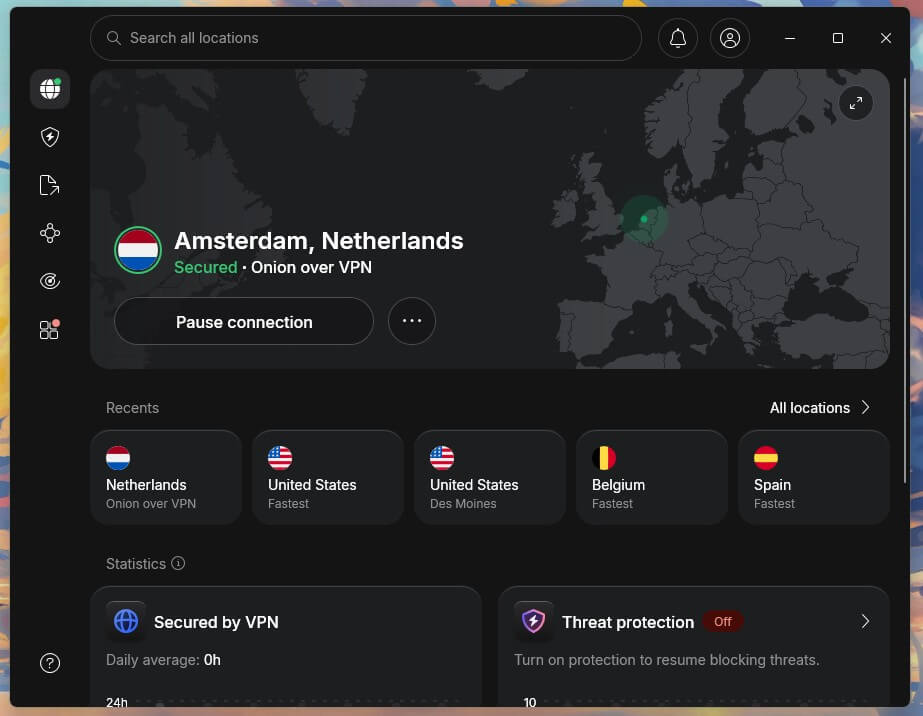
NordVPN is the provider we place first across the board, and it answers most PureVPN complaints at once. Deloitte has audited its no-logs policy 6 times, most recently in February 2026. The company operates from Panama and uses RAM-only servers that wipe on every reboot, which PureVPN’s disk-based hardware can’t match. Coverage reaches 9,500+ servers in 149 countries.
PureVPN has 65+ countries. Post-quantum encryption applies across NordLynx in every location. Streaming held up in our testing on Netflix, Prime Video, and Hulu, and NordVPN was the fastest provider we tested. It also handles blocked sites and apps on restricted networks, including school and campus Wi-Fi.
Device support matches PureVPN at 10, extendable across a whole network through a router. The 2-year plan costs $3.49/mo, billed at $94.23 for 27 months, with a 30-day money-back guarantee.
Pros
- Fastest speeds in our tests
- 6 Deloitte no-logs audits
- RAM-only servers wipe on reboot
- Post-quantum encryption on NordLynx
Cons
- Renewal price climbs steeply
- Capped at 10 devices
2. Proton VPN: Best Privacy and Coverage
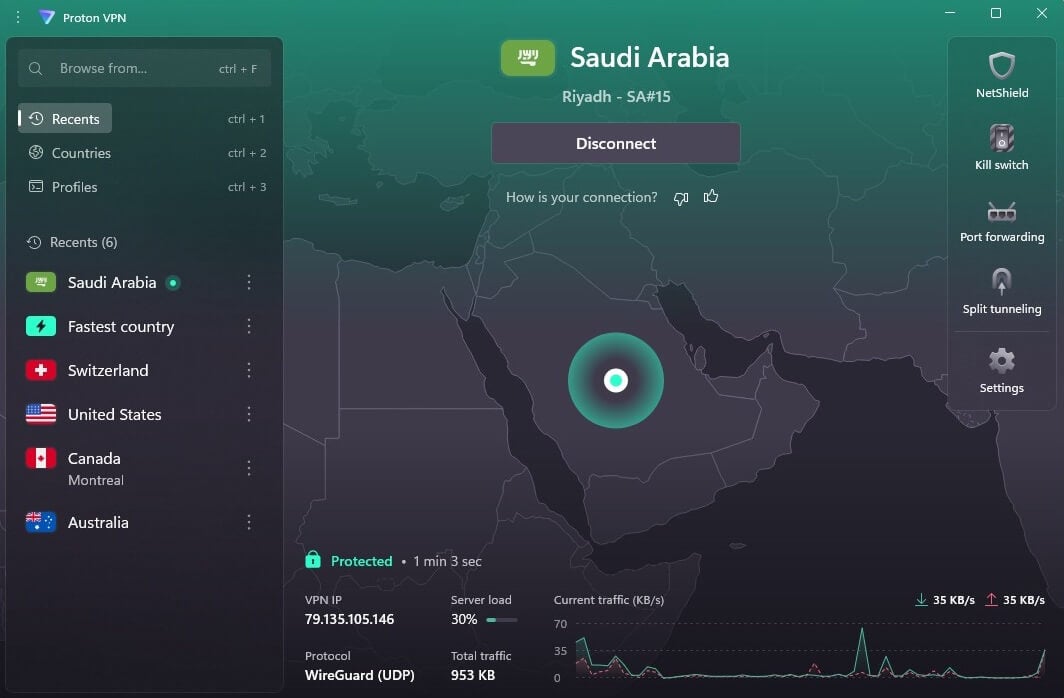
The 2017 case drives most departures from PureVPN, and Proton VPN has nothing comparable on its record. The Swiss PureVPN alternative publishes its app source code for inspection and submits to independent no-logs audits. Swiss law has no data retention obligation on VPN operators. Coverage is the other reason to move: 20,000+ servers in 148 countries.
Secure Core passes traffic through a second hardened server before it exits, NetShield blocks ads and trackers without a surcharge, and Stealth obfuscation gets connections working on networks that filter VPN traffic. Streaming is strong. Proton VPN unblocked every platform we pointed it at, and it holds up as a daily streaming VPN. It allows 10 simultaneous connections.
It includes the strongest free tier available, covering 10 countries with unlimited data on 1 device. Paid plans start at $2.99/mo on the 2-year term, billed at $71.76, with 30 days to claim a refund.
Pros
- 20,000+ servers in 148 countries
- Open-source, independently audited apps
- Swiss jurisdiction, clean track record
- Usable free plan included
Cons
- No post-quantum option
- No Smart DNS
3. ExpressVPN: Best for Speed and Easy UI
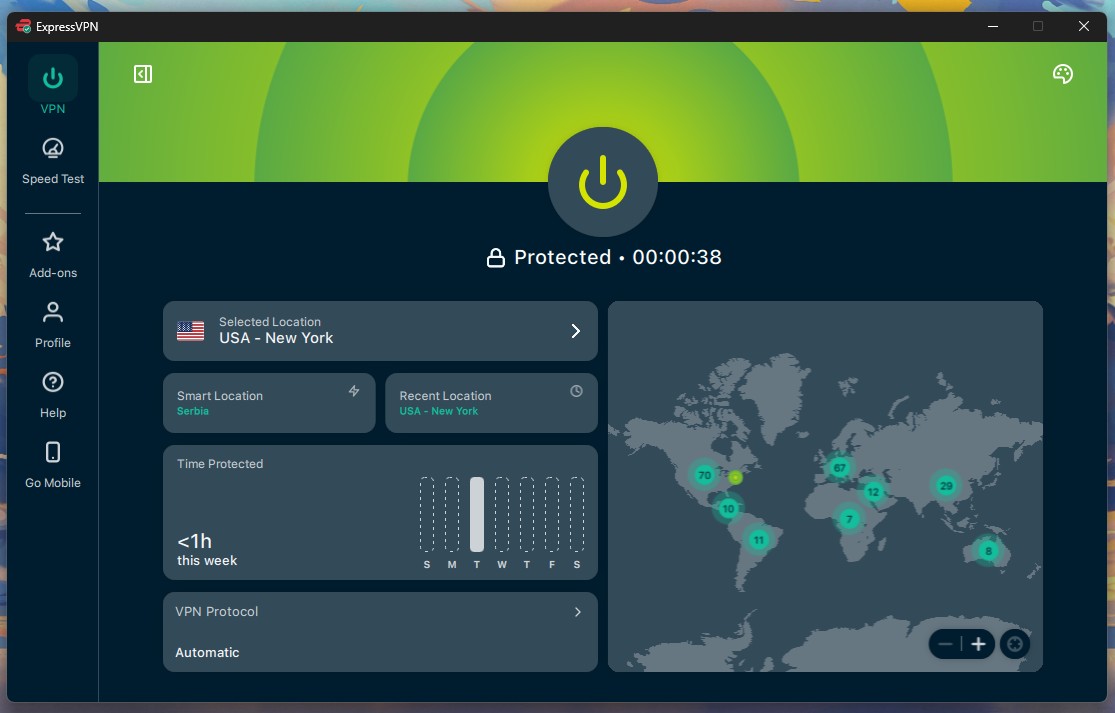
ExpressVPN shares PureVPN’s British Virgin Islands base but has published more audits of its systems, and it has never handed over user data. Its privacy policy states that no browsing history, traffic destination, DNS query, connection timestamp, or session duration is stored anywhere. Apps are the strongest argument. They’re light, near-identical across platforms, and easy for a first-time user.
This matters if PureVPN’s busier interface put you off. Protocol support covers Lightway and WireGuard, and post-quantum encryption is available. Coverage reaches 214 locations across 113 countries. Geo-blocks give way reliably, whether you want to reach Paramount Plus from outside the US or keep a betting account accessible while traveling.
The Basic tier now allows 10 devices, matching PureVPN, and costs $2.99/mo, billed $83.72 for 28 months. Renewal is $99.95/year, so budget for the jump.
Pros
- Simplest VPN app
- Extensive published audit history
- Lightway and WireGuard both supported
- Post-quantum encryption available
Cons
- Costs more than PureVPN
- Renews at $99.95 yearly
4. Private Internet Access: Best Budget PureVPN Replacement
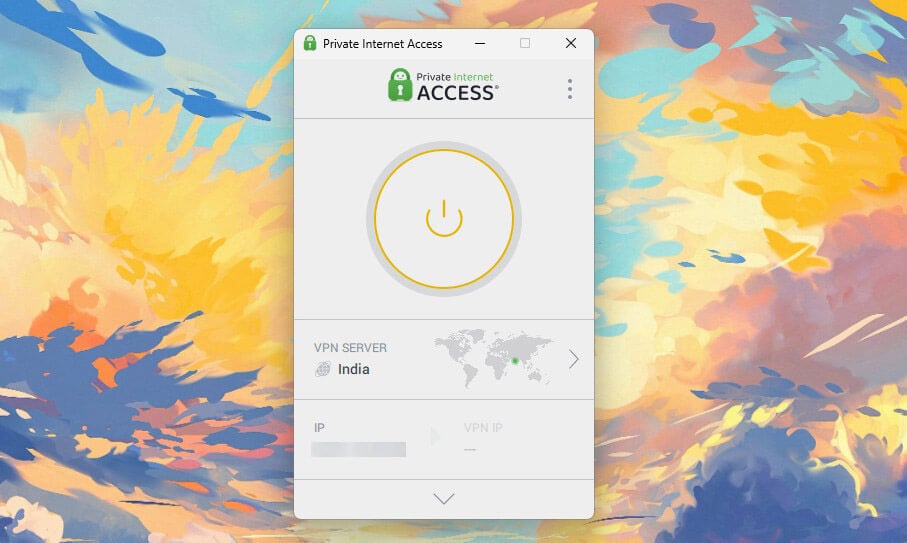
PureVPN prices low. PIA prices lower, and it removes the device ceiling completely. That combination makes it the best value option among the major providers, especially for a household protecting phones, laptops, TVs, and a console at once. The privacy question is fair: PIA operates from the United States, a 5 Eyes country. Its answer is stronger than a policy statement.
Courts have asked for user data more than once, and it produced nothing usable because nothing existed. It publishes quarterly transparency reports listing every subpoena and court order received, and it has made all its apps open source. Coverage totals 26,000+ servers in 91 countries. Streaming works well, with Netflix US, BBC iPlayer, and Prime Video opening in our tests.
Pricing starts at $2.19/mo on the 2-year plan, or $56.94 for the initial term, then $56.94 a year. Compare that against what the rest of the market charges.
Pros
- Cheapest PureVPN alternative
- Unlimited simultaneous connections
- Open-source apps
- No-logs claim tested in court
Cons
- United States jurisdiction
- Settings menu feels dense
5. Surfshark: Best for Unlimited Devices
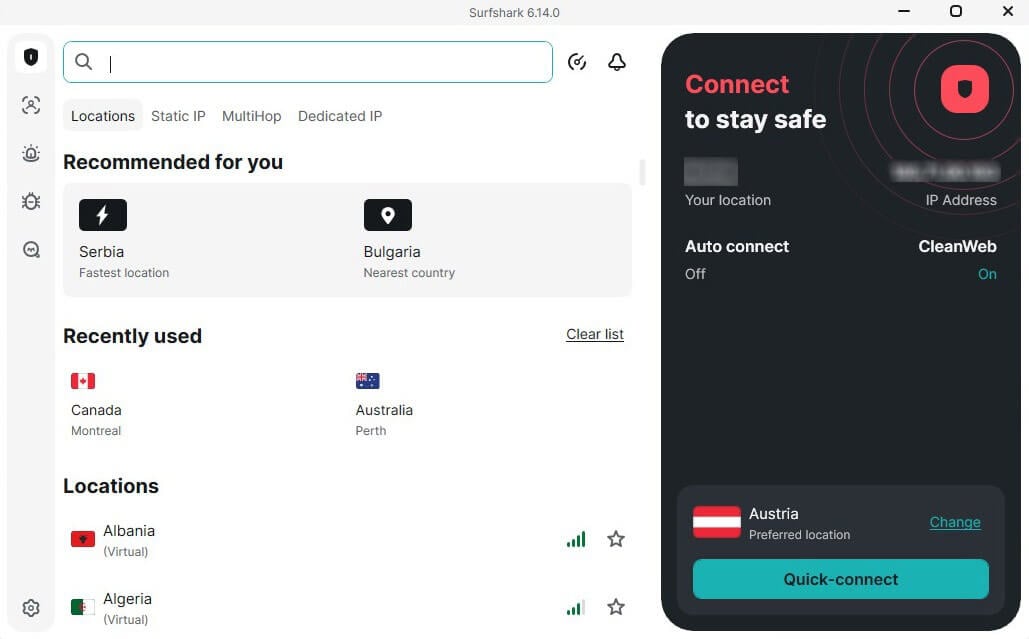
Surfshark also drops the connection limit, and it pairs that with a feature set PureVPN charges extra for. CleanWeb handles ads and trackers, the Web Content Blocker filters whole categories of sites, and a recent addition flags scam text messages on iOS and Android. Multiple audits back the no-logs statement; servers hold data in RAM only, and the logging policy is clean.
It states that temporary session records are deleted within 15 minutes of disconnection. Dutch jurisdiction places it inside a 9 Eyes country, though Dutch law requires no VPN logging. Unblocking is a strength across 4,500+ servers in 100 countries, including switching your YouTube TV home area.
Mac users also get Dausos, a proprietary protocol with a dedicated tunnel per user and post-quantum resilient encryption, audited by Cure53. The Starter plan costs $2.49/mo, and it’s billed at $67.23 for 27 months.
Pros
- Unlimited devices on every plan
- Best option for Netflix
- Blocks ads and site categories
- Dausos protocol resists quantum attacks
Cons
- Dausos limited to macOS
- Monthly plan costs a lot
How We Chose These Providers
We treated PureVPN’s current specification as the baseline, then measured each alternative against it on coverage, audit history, jurisdiction, server infrastructure, included features, device allowance, and price over a full billing term. Speed and unblocking results come from our testing, checking UK, US, and Japanese servers. VPNs that only beat PureVPN on marketing claims didn’t make the list. Every price reflects the current published rate, including what happens at renewal.
Summary: What’s the Best PureVPN Alternative?
The 5 best PureVPN alternatives are NordVPN, Proton VPN, ExpressVPN, Private Internet Access, and Surfshark. NordVPN takes the top spot on the strength of its audit record, speed, and unblocking. Proton VPN answers the trust question most directly, PIA answers the price question, and Surfshark answers the device question. Each has a 30-day money-back guarantee, so testing costs nothing.
PureVPN Alternatives: FAQ
🛡️ Is PureVPN Safe to Use?
Yes. PureVPN operates from the British Virgin Islands, has passed 4 consecutive no-logs audits by KPMG under an always-on arrangement, and holds ISO 27001 certification. It also publishes a warrant canary and periodic transparency reports.
🔄 Why Do People Look for PureVPN Alternatives?
The 2017 incident, when PureVPN supplied browsing logs to the FBI despite advertising a no-logs policy, still affects trust. The server network covers 65+ countries, fewer than most rivals. Features including port forwarding, dedicated IPs, and extra device slots are sold as paid add-ons.
🔐 Does PureVPN Use RAM-Only Servers?
No. PureVPN operates conventional disk-based servers, so data isn't erased automatically at every reboot. NordVPN and Surfshark both use RAM-only infrastructure, where a restart clears the hardware by design.
👌 Which PureVPN Alternative Costs the Least?
Private Internet Access charges $2.19 a month on its 2-year plan, $56.94up front, and renews at the same figure. It also places no limit on simultaneous connections, which lowers the per-device cost further for a shared household.
🏛️ Does PureVPN Keep Logs?
No. PureVPN's current policy states that no data capable of identifying a user is stored, and KPMG has verified that claim across VPN servers, configurations, and supporting infrastructure 4 times. The 2017 case predates both the audit arrangement and the move out of Hong Kong.
▶️ Which Alternative Works Best for Streaming?
NordVPN unblocked every major platform in testing, including Netflix, Prime Video, Hulu, and BBC iPlayer, while delivering the fastest speeds. Proton VPN matched it on unblocking, with slightly lower speeds on distant servers.
📟 Do Any PureVPN Alternatives Offer Unlimited Devices?
Yes, they do. Private Internet Access and Surfshark allow unlimited connections on a single subscription. PureVPN caps accounts at 10 devices and sells additional slots from $1.49 a month.